High-Quality Bimetallic chromium carbide surfacing wear-resistant composite steel plate Supplier, Suppliers

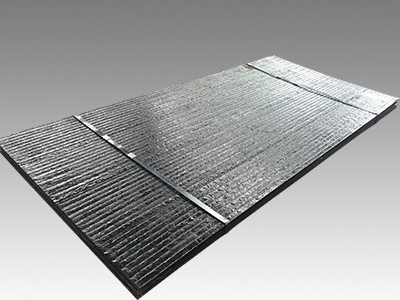
Wear plate for highly wear resistant hardfacing Composite material wearplate made of a structural steel backing & a hard weld surfacing. RX®wp 7500 is a composite material made of a structural steel backing and ahard weld surfacing,corresponding to DIN 8555.

Product Description

Material Specifications

Base Material All weldable steels, mostly Q235 steels (GB/T700-2006)
Material Type Alloy Components High-chromium / high-carbon alloy on iron base C - Cr - Fe
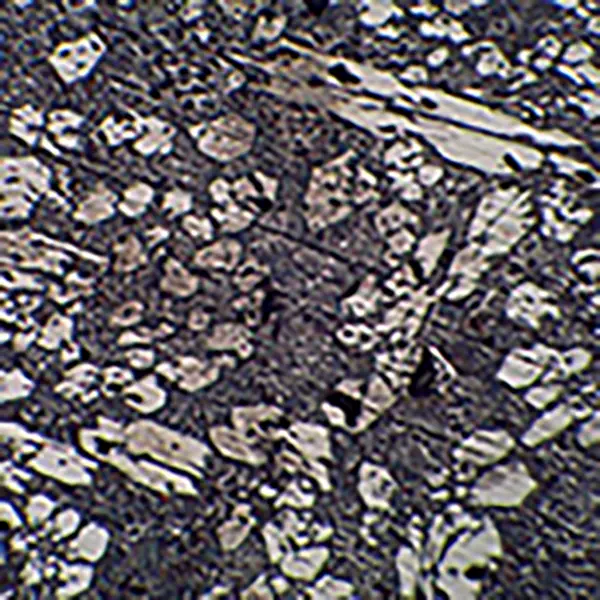
Metallographic Structure Chromium Carbide
Carbide Volume Fraction ≥ 35%
Hardness 58-62 HRC
Wear Resistant Plate Structure

Dimensions & Standard Formats

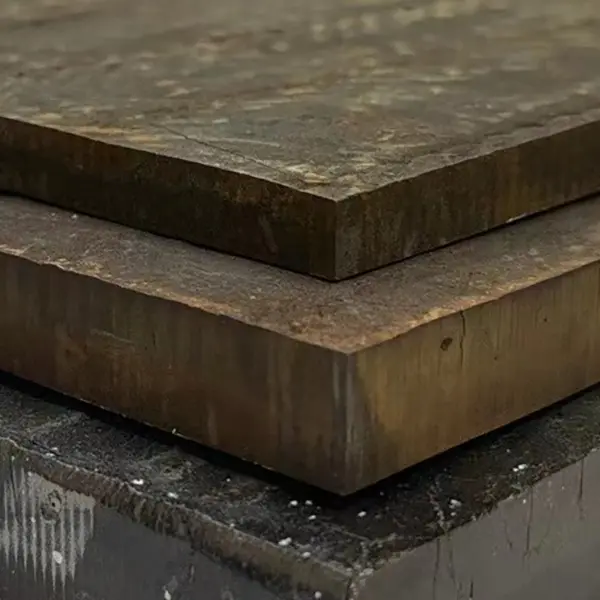
Thickness of the plates (Base material + Hardfacing) 3+3 / 4+4 / 5+3 / 5+5 / 6+4 / 6+6 / 8+4 / 8+6 / 8+8 / 10+4 / 10+6 / 10+8 / 10+10 / 12+4 / 12+6 / 12+8 / 12+10 / 12+12 ........ (mm)
Standard formats 1400*3850 / up to 2200*6000 (mm)
Wear plate dimensions detail
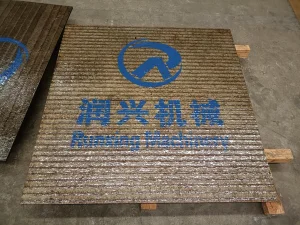
Wear plate surface view

Handling & Industry Applications

Handling Conventional machining is possible only by grinding.
Thermal cutting using laser, plasma, or water jet cutting.
Fixing by welding or bolting on the base material.
Constructions are comparable with conventional steel construction.
Industry application Steel industry, cement industry, power stations, mining, sand and gravel industry, concrete industry, glass industry, recycling industry, timber wood industry, chemical industry, petrochemical industry, etc.
Recommended application General abrasion resistance
FAQ
Q1: What are the base materials used for these wear plates?
A: The wear plates are compatible with all weldable steels, primarily utilizing Q235 steels (conforming to GB/T700-2006 standards) as the base material.
Q2: What is the chemical composition and hardness of the alloy overlay?
A: The overlay is a high-chromium / high-carbon alloy on an iron base (C - Cr - Fe), featuring a metallographic structure of Chromium Carbide. It achieves a high hardness rating of 58-62 HRC.
Q3: What standard thicknesses and plate sizes are available?
A: We offer multiple plate thickness combinations (Base material + Hardfacing) starting from 3+3 mm up to 12+12 mm. Standard dimensions are available at 1400*3850 mm, ranging up to 2200*6000 mm.
Q4: How should these wear plates be machined and cut?
A: Conventional machining is only possible by grinding. For cutting, thermal cutting processes like laser, plasma, or water jet cutting must be used.
Q5: How can the plates be installed and fixed?
A: The plates can be fixed either by welding or by bolting directly onto the base material structure.
Q6: In which industries are these wear plates commonly applied?
A: They are recommended for general abrasion applications in industries such as steel, cement, power stations, mining, concrete, recycling, and petrochemicals.

Related Products