Runxing machinery
Industrial Landscape & Welding Wire Demand in the Italian Market
Italy represents one of the most mature, high-performance manufacturing and metallurgical hubs in Europe. Centered around industrial regions such as Lombardy, Veneto, and Emilia-Romagna, the Italian steel processing, shipbuilding, automotive, and heavy equipment industries require precision-engineered materials that comply with strict European Union directives and EN ISO quality frameworks. As Italian manufacturing pivots toward digital transformation and high-efficiency production lines, the sourcing of premium consumables like welding wires and hardfacing materials has become a focal point for operations managers seeking to minimize down-time and control operational expenses.
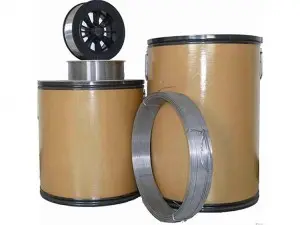
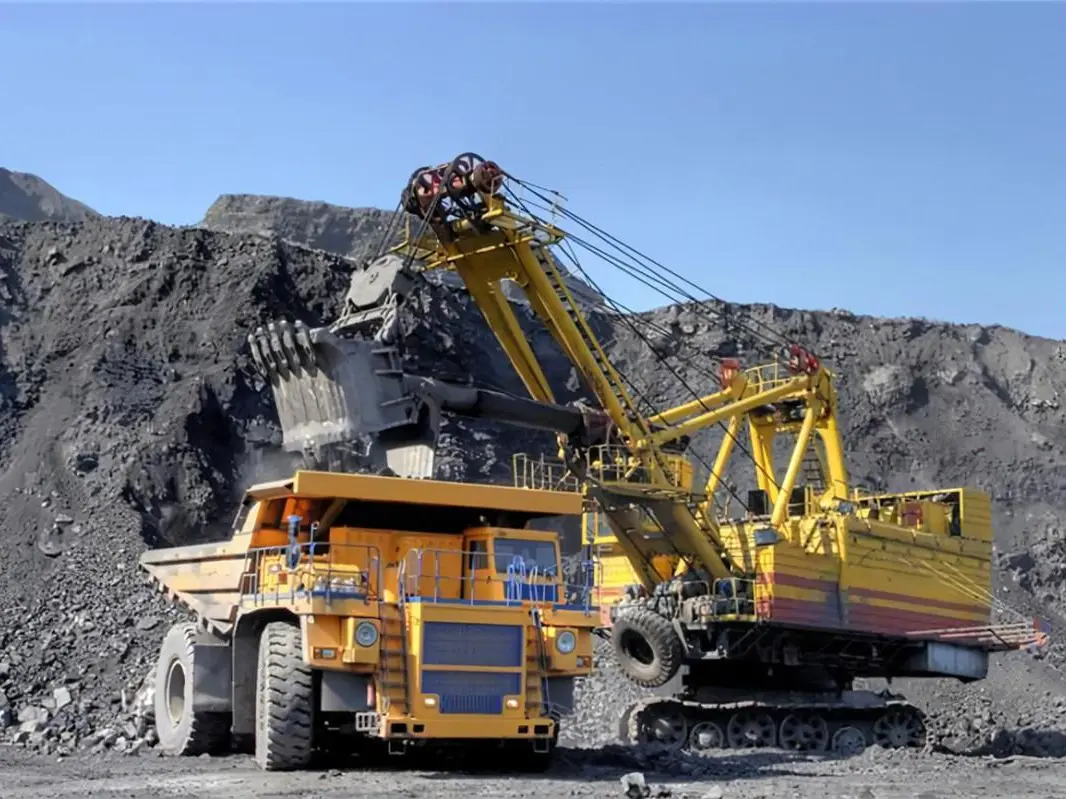
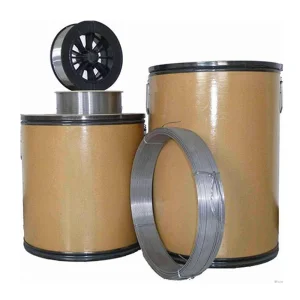
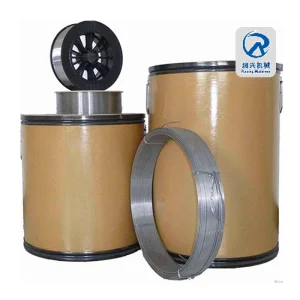
The demand for welding wire in Italy is driven by high-stress applications. From the repair of industrial machinery in cement plants near Bergamo to the maintenance of mining equipment in Sardinia, and structural welding at Mediterranean shipyards, welding consumables must offer predictable mechanical properties. Traditional solid wires are increasingly being replaced by flux-cored wires (FCAW) due to their superior deposition rates, deeper penetration profiles, and capability to deposit high-chromium alloy layers for severe wear protection.
Key Insight: The Shift Towards Flux-Cored Wires in Southern Europe
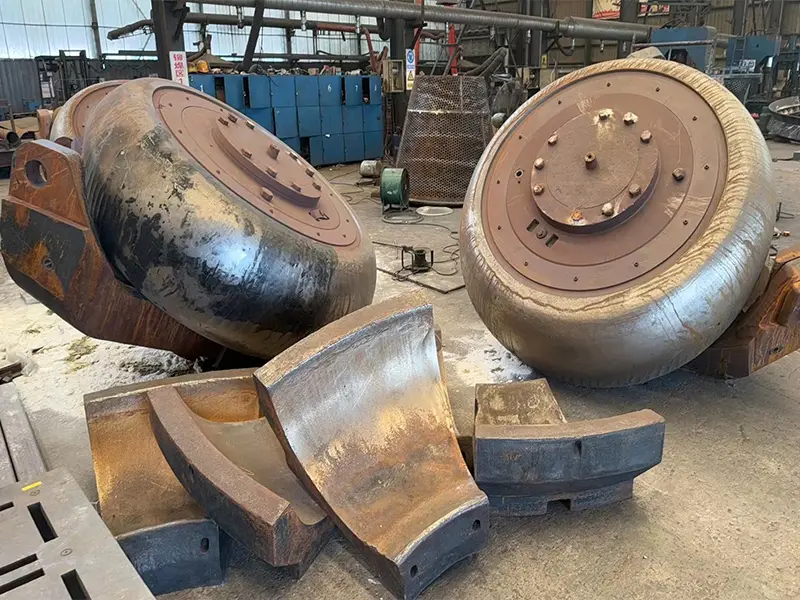
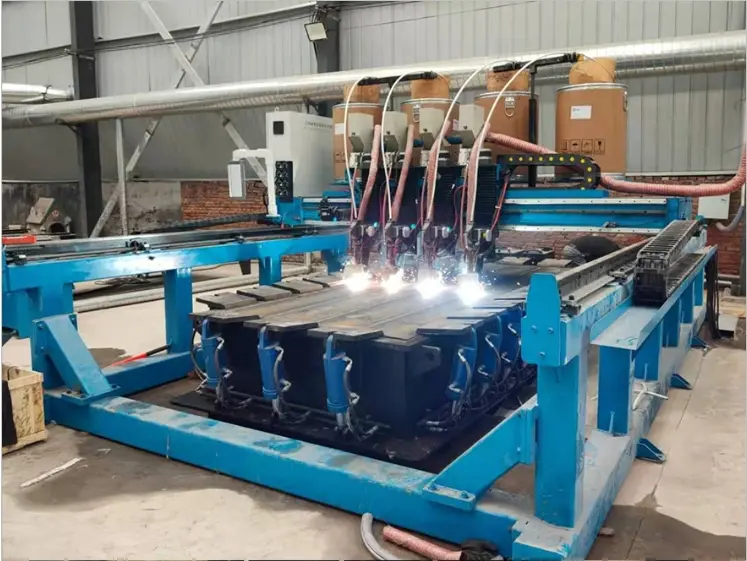
Tribological research indicates that components protected with automated hardfacing see up to a 300% increase in operational service life compared to untreated structural steels. In Italy's highly competitive industrial sector, adopting high-chromium overlay techniques directly correlates with lower maintenance overheads and improved process efficiency.
Technical Analysis of Hardfacing Alloys: E-E-A-T Perspective
To select the appropriate welding wire for hardfacing, engineers must evaluate the specific wear mechanism: micro-ploughing, micro-cutting, high-stress abrasion, or severe impact. Tangshan Runxing Machinery Co., Ltd. customizes its flux formulations to address these mechanisms, offering solutions that meet the requirements of German VAUTID standards under a continuous agency agreement.
Metallurgical Chemistry and Phase Distribution
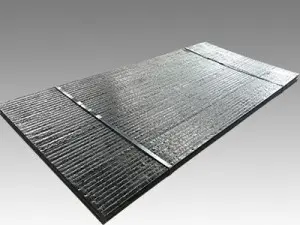
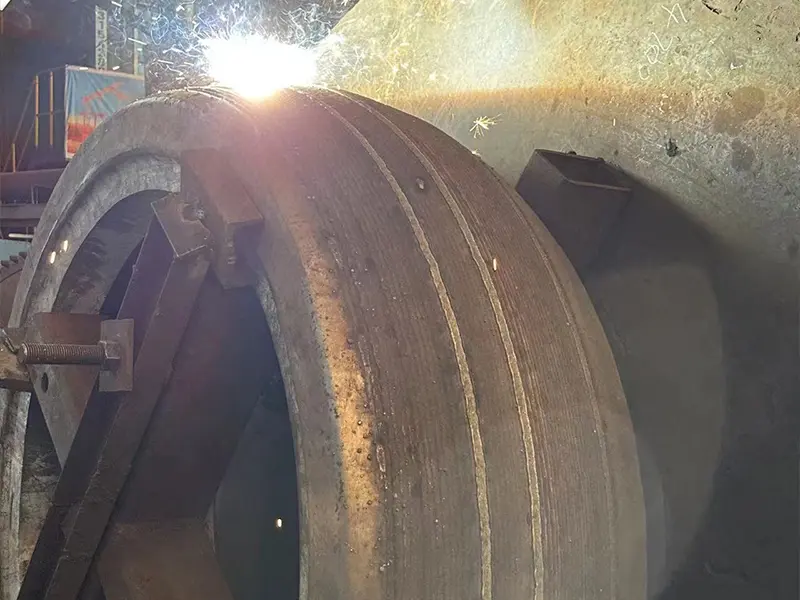
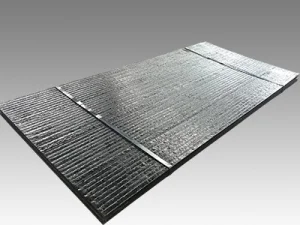
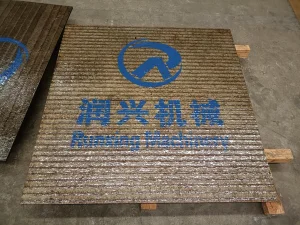
Premium hardfacing wires deposit a hypereutectic microstructure containing primary M7C3 chromium carbides embedded in a tough, support matrix of austenite. Our Chromium Carbide Overlay (CCO) plates and weld deposits achieve a high concentration of primary chromium carbides (typically over 30-40% volume fraction), ensuring exceptional resistance to abrasive wear:
- M7C3 Carbides: Provide localized hardness values exceeding 1200 HV (Vickers), effectively resisting penetration from silica and quartz particles.
- Austenitic Matrix: Absorbs mechanical shock, preventing micro-cracks from propagating into structural failure under low-to-medium impact loads.
- Low Dilution Ratios: Advanced manufacturing ensures that the chemical integrity of the hardfacing layer is maintained, achieving maximum wear resistance in the very first weld pass.