Industrial procurement of wear-resistant steel has shifted from basic quenched-and-tempered (AR) plates to bimetallic Chromium Carbide Overlay (CCO) plates. This transition is driven by the demand for extended service life in high-stress abrasive environments. Procurement officers and plant managers evaluate suppliers based on metallurgical parameters: primary carbide volume fractions, dilution percentages, and matrix hardness consistency.
Selecting a direct factory supplier requires reviewing the chemical composition. Premium CCO plates contain 3.5% to 5.5% Carbon (C) and 25% to 40% Chromium (Cr). This composition precipitates primary hexagonal M7C3 chromium carbides (micro-hardness 1200-1600 HV0.3) dispersed in a wear-resistant eutectic matrix.
Total Cost of Ownership (TCO) Calculation: While CCO plates have a higher initial purchase cost compared to conventional structural steel or standard AR400/500 plates, their operational lifespan is up to 10 times longer. Reduced replacement cycles, lower labor costs, and minimized downtime contribute to long-term operational savings.
| Grade Classification | Typical Chemistry (wt%) | Hardness Range (HRC) | ASTM G65 Wear Resistance | Primary Applications |
|---|---|---|---|---|
| Runxing RX-m Standard | C: 3.5-4.5%, Cr: 25-30%, Fe: Bal. | 58 - 62 HRC | < 0.18g loss (Procedure A) | Cement chutes, mining bins, hopper liners |
| Runxing Complex Carbide | C: 4.0-5.5%, Cr: 25-35%, Nb/V/W additions | 60 - 65 HRC | < 0.12g loss (Procedure A) | Blast furnace hoppers, hot sinter screens |
| Bimetallic Base Clad | C: 3.0-4.0%, Cr: 22-28%, Fe: Bal. | 55 - 60 HRC | < 0.22g loss (Procedure A) | General slurry pipes, fan blade liners |

Equipment availability is critical in cement plants. From limestone crushing to raw meal separation, clinker processing, and final cement grinding, CCO plates protect raw meal chutes, cyclone liners, separator vanes, and mill body internal linings against fine-particle erosion and heavy abrasion.
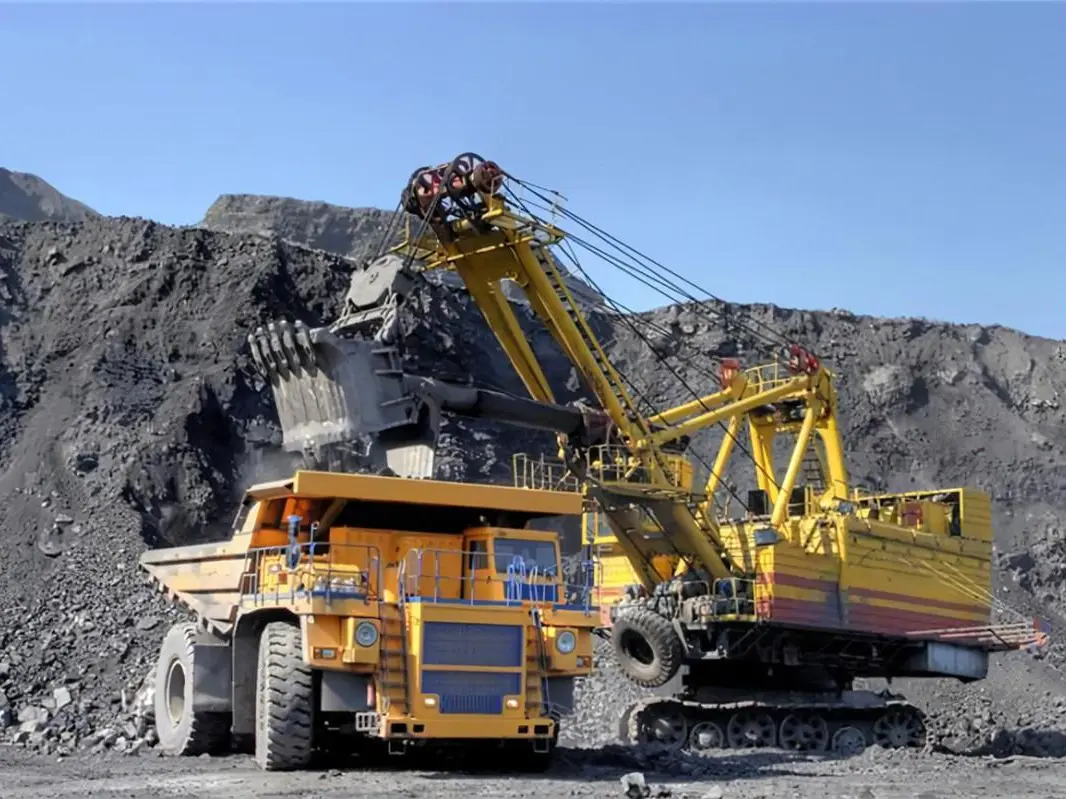
Mine operators seek to increase productivity, profitability, and safety. Runxing CCO plates and hardfacing materials are used on dragline buckets, excavator linings, dump truck beds, transfer chutes, and vibrating screens, reducing downtime in iron ore, copper, coal, and gold mining operations.
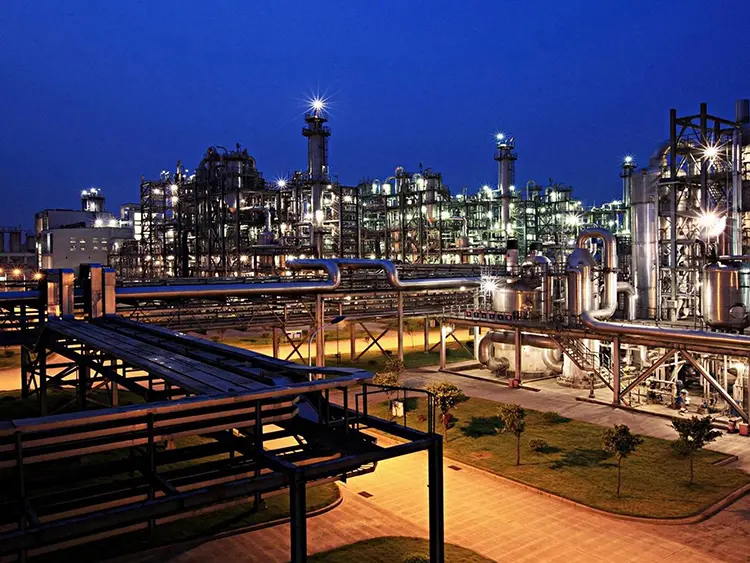
Steel manufacturing involves handling abrasive raw materials at elevated temperatures. Runxing's complex bimetallic solutions protect blast furnace top bunkers, sinter plant feed hoppers, coke distribution systems, and hot sinter screens against combined mechanical and thermal stress.
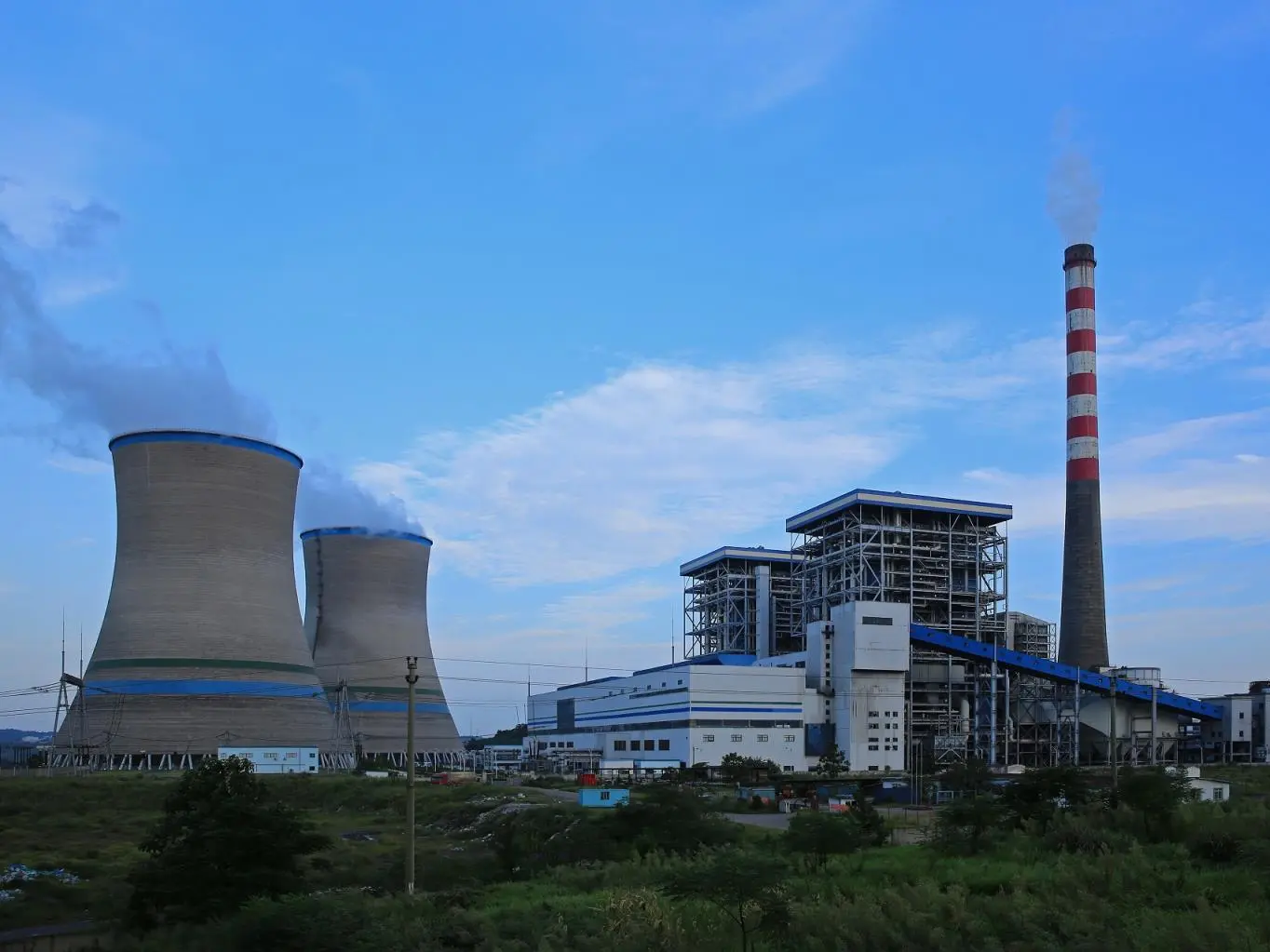
In coal-fired power plants, coal pulvizers, exhaust fans, and fuel transfer systems are subject to continuous erosive wear. Runxing CCO wear-resistant pipes and hardfaced fan blades maintain airflow velocities, control emission dust, and prevent unexpected boiler shutdown cycles.
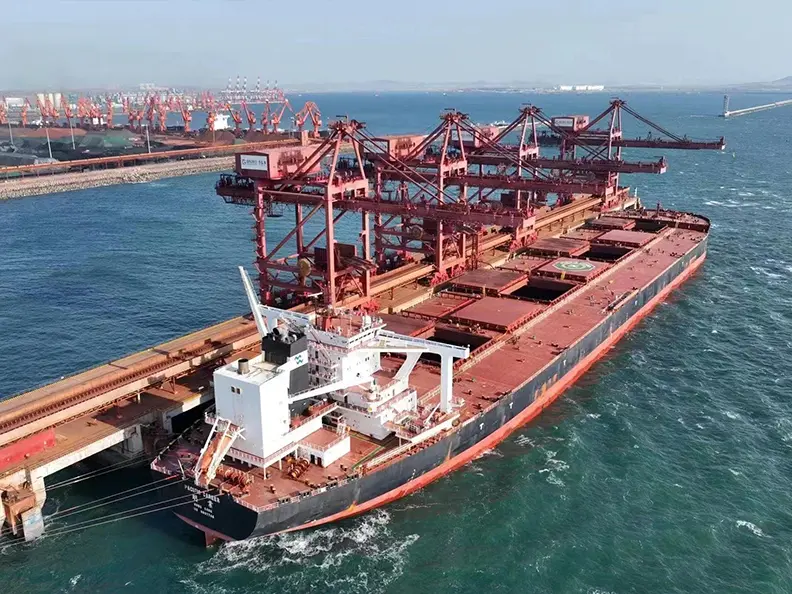
Ports handle large volumes of bulk commodities, including iron ore, metallurgical coal, and grain. Loading/unloading chutes, hopper gates, and yard stacking equipment require wear protection. Runxing custom CCO plates are engineered for high-throughput logistics terminals.
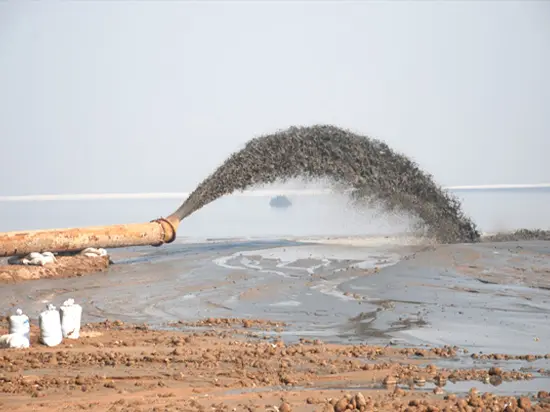
For applications subject to chemical corrosion and fine particle abrasion without severe impact, wear-resistant alumina ceramic panels sintered at high temperatures provide an alternative to CCO plates in pneumatic conveying and chemical processing.
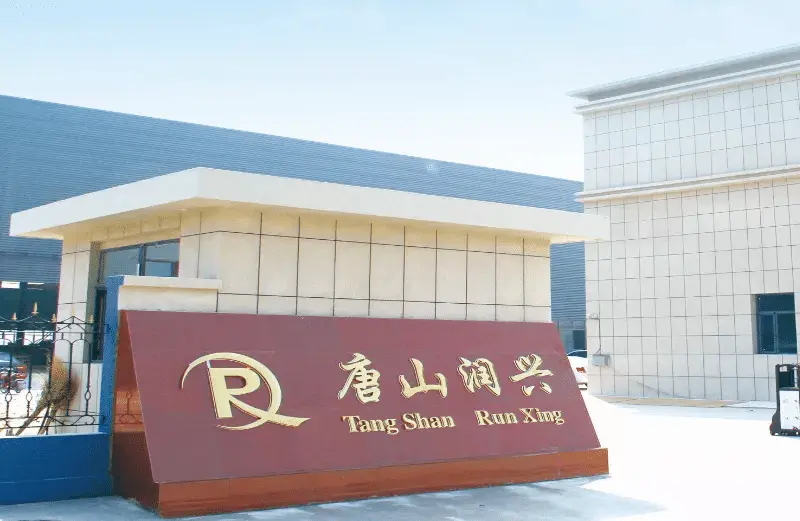
Founded in 2010 in Tangshan, Hebei Province, Tangshan Runxing Machinery Co., Ltd. is a professional manufacturer focused on the R&D, production, and on-site construction of hardfacing wear-resistant metal products.
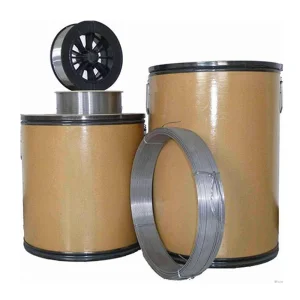
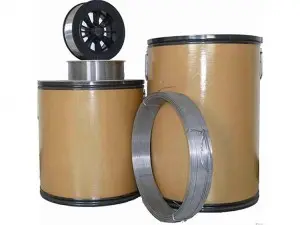
The company’s product line includes chromium carbide overlay (CCO) wear plates, custom processed wear liners, wear-resistant pipes and pipe fittings, hardfacing flux-cored welding wires, automatic hardfacing welding machines, and professional roller surfacing repair services.
To serve international clients, all export operations are managed by Hebei Yuwan International Trade Co., Ltd. This partnership handles customs clearance, logistics, documentation, and payment collection, allowing the factory to focus on manufacturing, quality control, and technical development.
For six consecutive years since 2019, Runxing Machinery has been a qualified agent for VAUTID in Germany. By integrating high-quality VAUTID materials into selected wear-resistant products, the company provides solutions meeting international standards for performance.
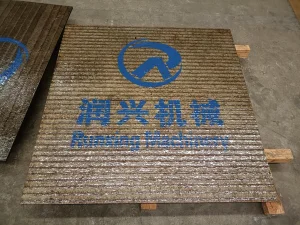
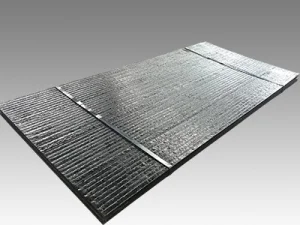
Chromium Carbide Overlay (CCO) plates are composite materials consisting of a structural base plate (such as ASTM A36, Q235B, or Q345B carbon steel) and a hardfaced, wear-resistant alloy layer deposited via open-arc or submerged-arc welding.
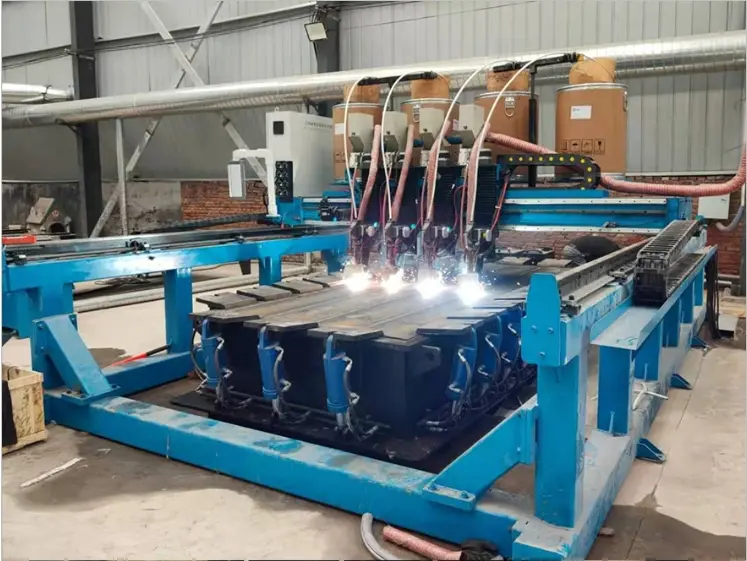
Weld dilution refers to the mixing of the base metal with the clad alloy. Controlling dilution is critical for maintaining wear properties in the cladding. Standard production utilizes automatic, oscillating multi-electrode cladding systems. This technology regulates heat input to minimize iron dilution from the base metal, ensuring that the primary M7C3 chromium carbides precipitate within the first layer.
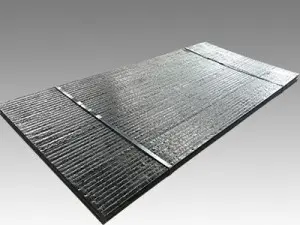
A key feature of high-quality CCO plates is the presence of micro-cracks running perpendicular to the welding direction. These cracks occur naturally due to thermal contraction stress during cooling. The cracks release residual stresses within the clad layer, preventing delamination and distortion while the plate is bent or formed. They do not compromise the plate’s wear resistance.
Runxing’s R&D team works on complex alloy structures by adding secondary carbide formers like Niobium (Nb), Vanadium (V), Tungsten (W), and Titanium (Ti). These elements form smaller, harder secondary carbides that fill the interstitial spaces between primary chromium carbides, improving erosion resistance in high-temperature environments.

At the 2024 South Africa International Construction and Mining Machinery Exhibition in Johannesburg, Runxing presented its CCO wear plates and automatic roller surfacing solutions to mining and power generation companies in the African continent.
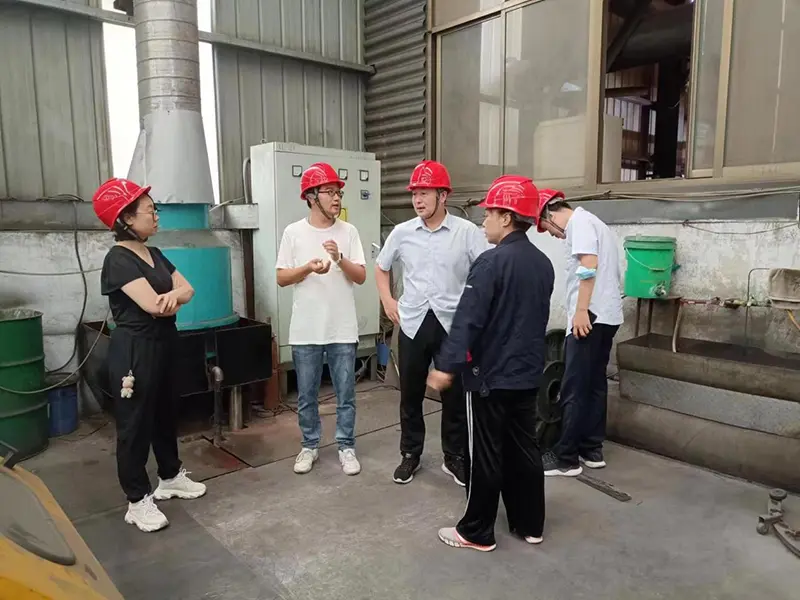
In 2023, leaders and material scientists from Tangshan University’s Metal Materials and Forming Technology team visited Runxing’s facilities. This ongoing academic collaboration helps optimize overlay microstructures and weld bead profiles.
Since 2019, Runxing has been a qualified agent for VAUTID in Germany. Using VAUTID welding consumables for specific high-stress applications combines international alloy technology with regional manufacturing capacity.
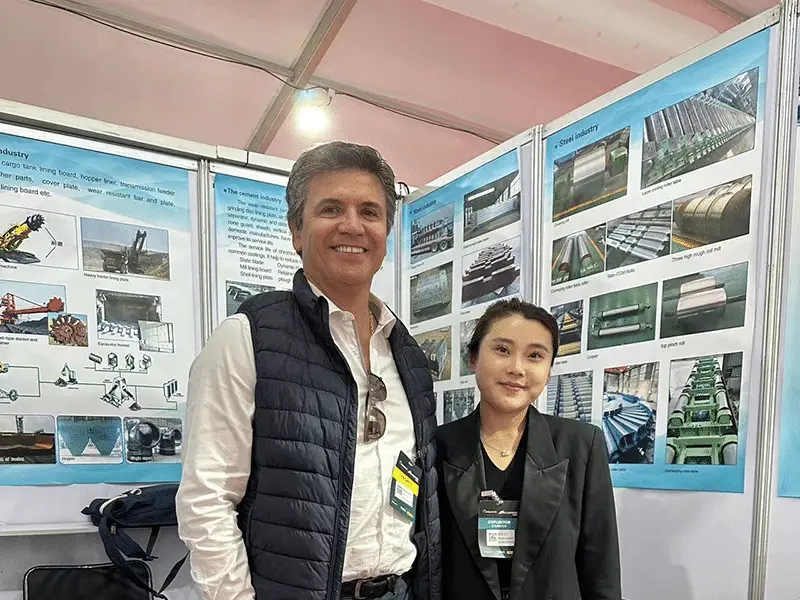
Runxing Machinery exhibited at EXPOMIN 2023 in Santiago, Chile, presenting wear solutions for high-altitude copper and lithium mines. The company’s range of customized CCO chute liners and wear plates was displayed for South American mining conditions.
Runxing launched a digital procurement platform (www.runxing-machinery.com) to provide interactive engineering specifications, AutoCAD layout support, and wear life calculation models for maintenance teams globally.
Runxing Machinery manufactures all overlay wear plates in compliance with ISO 9001 and DIN 8555 welding standards. Each batch is subjected to rigorous testing protocols to confirm it meets chemical composition and hardness profiles.
The ASTM G65 dry sand/rubber wheel abrasion test is used to measure dry sand abrasive wear resistance. Under standard testing (Procedure A), Runxing CCO plates show a mass loss of less than 0.18 grams. This low wear rate ensures extended service life when handling quartz-rich and high-hardness materials.
Runxing provides fabrication services for custom CCO liners based on engineering drawings:
A CCO plate is a composite material consisting of a structural steel backing plate (such as Q235B or Q345B) overlaid with a high-carbon, high-chromium wear alloy. Deposited by arc welding, the overlay contains hard primary chromium carbides (M7C3) that protect the equipment from severe abrasion.
The cross-checking micro-cracks on CCO plates are normal stress-relief cracks. They form during the cooling phase of the welding process. These cracks relieve residual stresses within the weld overlay, preventing delamination and enabling cold bending during fabrication without cracking the base plate.
Yes. The mild steel backing plate is weldable and can be attached to structural steel frames using standard low-hydrogen welding electrodes. Additionally, CCO plates can be cold-rolled or bent using industrial press brakes, with the overlay on either the inside or outside radius depending on application requirements.
AR (abrasion-resistant) steels are quenched-and-tempered carbon steels with uniform hardness throughout. CCO plates are bimetallic composites with a hard surface layer containing chromium carbides. CCO plates offer up to 5-10 times the wear life of AR500 steels under extreme sliding abrasion conditions.
Standard Runxing CCO plates maintain their hardness at temperatures up to 350°C. For applications subject to higher heat, such as blast furnace components or sinter plants, specialized grades alloyed with elements like Niobium and Vanadium are available for service temperatures up to 600°C.









 Runxing machinery