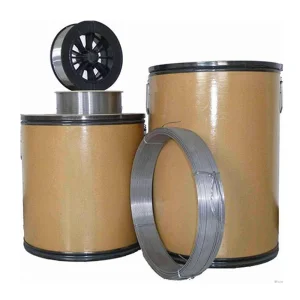
High-alloy deposition chemistry designed for demanding industrial reclamation, impact absorption, and extreme abrasive environments.
Explore Specifications >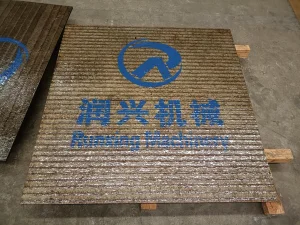
Ultra-hard cladding panels customized specifically for heavy-duty mining chutes, cement hoppers, and processing liners.
Explore Specifications >
Engineered primary chromium carbide structures in a tough iron-matrix for severe sliding abrasion resistance.
Explore Specifications >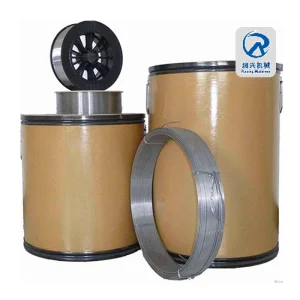
Optimized open-arc flux formulations facilitating exterior build-up without external shielding gas setups.
Explore Specifications >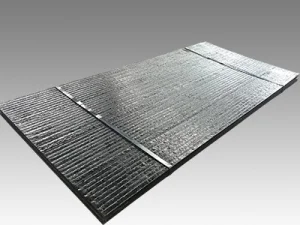
Dual-layer structure combining structural steel backing plate with hardfacing weld cladding for mechanical versatility.
Explore Specifications >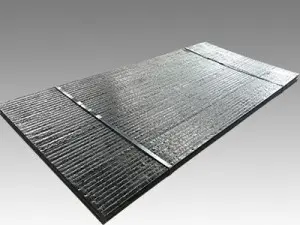
Premium composite wear plate conforming to DIN 8555 specifications. Hard weld surfacing integrated with structural steel backing.
See More Products >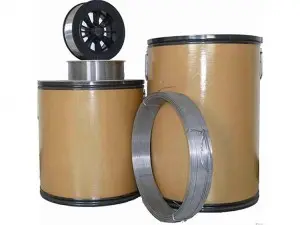
High-alloy self-shielded wire designed for low-impact, high-stress grinding abrasion environments on industrial surfaces.
See More Products >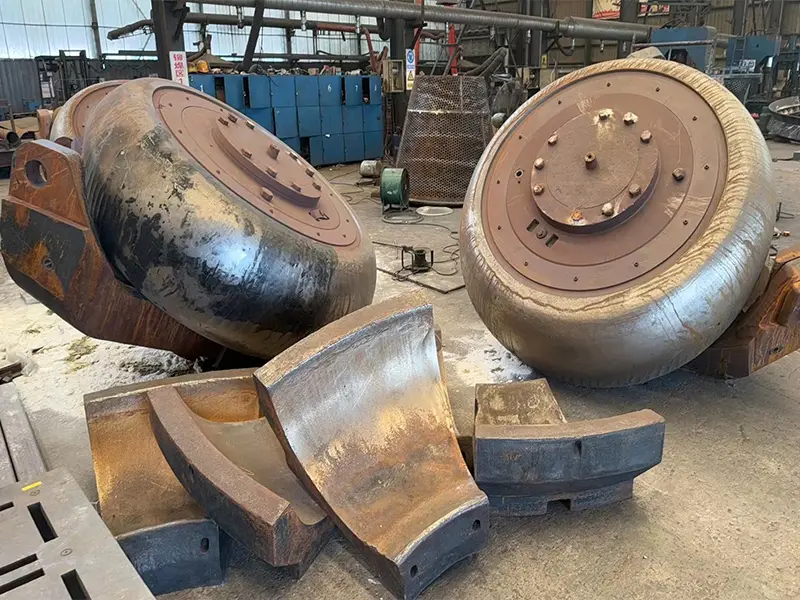
Plasma Transferred Arc (PTA) specialized surfacing coatings for precision components in demanding metallurgy cycles.
See More Products >In modern industrial manufacturing, the transition toward automated fabrication, robotic welding cells, and heavy structural engineering has elevated the critical role of solid welding wire. Unlike traditional stick electrodes or flux-cored options, GMAW (Gas Metal Arc Welding) solid wires offer high deposition efficiency, minimal slag production, and superior mechanical weld joint properties. As global infrastructure demands shift toward structural resilience and continuous automated lines, global enterprise procurement teams require consistent, high-yield consumable inputs to prevent costly downtime.
Global raw material cost volatility, combined with stringent international quality standards (such as AWS, EN ISO, and DIN), means sourcing managers must select an original design manufacturer (ODM) with integrated metallurgy design capacities. Choosing a reliable ODM solid wire factory allows large-scale buyers to lock in specific mechanical properties, customize wire coating chemistry to limit contact tip wear, and adjust copper-coating thicknesses for optimal electrical conductivity during continuous duty cycles.
The performance of solid welding wire is determined by the precise balance of deoxidizing elements (mainly silicon and manganese) and trace impurities like sulfur and phosphorus. During the solid wire drawing process, continuous chemical verification is necessary to guarantee micro-alloying integrity. The table below represents standard metallurgical classifications for general structural and high-strength low-alloy steel applications manufactured under strict ODM controls:
| AWS Classification | C (%) | Mn (%) | Si (%) | P & S (%) | Typical Mechanical Strength | Primary Gas Shielding |
|---|---|---|---|---|---|---|
| AWS A5.18 ER70S-6 | 0.06 - 0.15 | 1.40 - 1.85 | 0.80 - 1.15 | < 0.025 | Yield > 400 MPa, Tensile > 480 MPa | 100% CO2 or Ar/CO2 Blends |
| AWS A5.18 ER70S-3 | 0.06 - 0.15 | 0.90 - 1.40 | 0.45 - 0.75 | < 0.025 | Yield > 400 MPa, Tensile > 480 MPa | Ar/CO2 Mix (Smooth Profile) |
| AWS A5.28 ER80S-D2 | 0.07 - 0.12 | 1.60 - 2.10 | 0.50 - 0.80 | < 0.025 | Yield > 470 MPa, Tensile > 550 MPa | Ar/CO2 (High Strength / Low Alloy) |
| AWS A5.9 ER308L (SS) | < 0.03 | 1.00 - 2.50 | 0.30 - 0.65 | < 0.030 | Elongation > 35%, Tensile > 520 MPa | Ar/O2 or Ar/CO2 (Stainless Joints) |
A higher manganese (Mn) and silicon (Si) composition (as found in ER70S-6) provides enhanced deoxidation compared to ER70S-3. This makes it ideal for welding over light mill scale, rust, or surface contaminants. The silicon content increases weld pool fluidity and wet-out, yielding a flatter bead profile and minimizing post-weld grinding. Our ODM manufacturing processes tightly control these chemical limits to ensure consistent performance across batches.
During the final high-speed cold-drawing stage, solid welding wire is passivated and coated with a micro-thin layer of copper. This copper coating serves two purposes: protecting the wire from corrosion during storage and maximizing electrical current transfer at the contact tip. Runxing’s advanced manufacturing ensures the copper layer is uniform, preventing copper flaking that can clog liner conduits and disrupt wire feed speeds.
Equipment availability in cement processing depends on wear resistance. Our hardfacing solid wires, CCO plates, and specialized surfacing rebuild hoppers and vertical mill rollers to withstand sliding abrasion.
Designed for heavy mineral impact and abrasion. Our wear plates and overlay welds extend the service life of heavy excavator buckets, mining truck bodies, and transfer chutes.
Withstanding high operating temperatures and mechanical stress, our solutions protect raw material conveyors, sintering screens, and continuous caster rolls from premature thermal fatigue.
We protect coal mills, dust collection units, fan blades, and ash-handling pipelines from fly ash erosion and high-speed particle impacts, reducing maintenance cycles.
Protects yard grab buckets, stackers, reclaimers, and slurry discharge pipes from wet abrasive media and corrosive coastal environments during material transfer.
Comprehensive mechanical engineering support, including ceramic wear protection options, bimetallic plates, and custom-formulated overlay products.
Founded in 2010 in Tangshan, Hebei Province, Tangshan Runxing Machinery Co., Ltd. is a manufacturer specializing in the research, development, production, and on-site application of hardfacing wear-resistant metal products. Our plant produces chromium carbide overlay (CCO) wear plates, custom-fabricated wear liners, hardfacing flux-cored welding wires, automatic surfacing equipment, and roll restoration services.
Runxing’s core operations are supported by two key pillars: industrial expertise and research partnerships. We collaborate with Tangshan University (including Dean Yuan Shaoqiang, Vice Dean Li Jing, and Professor Yang Yuehui’s Metal Materials and Forming Technology team) to develop durable hardfacing alloys. Additionally, we have been a qualified agent for VAUTID (Germany) for six consecutive years since 2019, integrating European metallurgical technology with our production workflows.
Export operations are managed by Hebei Yuwan International Trade Co., Ltd., which handles customs clearance, logistics, and compliance documentation. This allows our production team to focus entirely on quality assurance, product development, and delivery timelines.
The manufacturing process for welding solid wire is evolving, driven by the demand for higher automation, low-spatter formulations, and reduced environmental impact. Our R&D roadmap focuses on three main developments:
Traditional copper-coated wires can release copper fumes during high-intensity welding, which poses health risks. In response, our metallurgical labs are developing copper-free solid wires. These use advanced surface treatment technologies to provide corrosion protection and reliable current transfer without the use of copper coating.
Modern welding demands consistent wire feedability. Our manufacturing processes include precision layer winding (PLW) and strict diameter tolerance controls (±0.01mm) to support robotic welding systems, including our 4-gun automated overlay stations. This ensures stable feeding and minimizes downtime in automated production cells.
For high-strength structural applications, preventing hydrogen-induced cracking is critical. Our solid wire manufacturing incorporates online thermal cleaning and descaling processes to eliminate residual lubricants and hydrogen-bearing compounds from the wire surface, ensuring low-diffusible-hydrogen weld deposits.
Showcasing our wear-resistant solutions and hardfacing materials at the Johannesburg International Convention Centre, strengthening our service network in Africa.
Read More >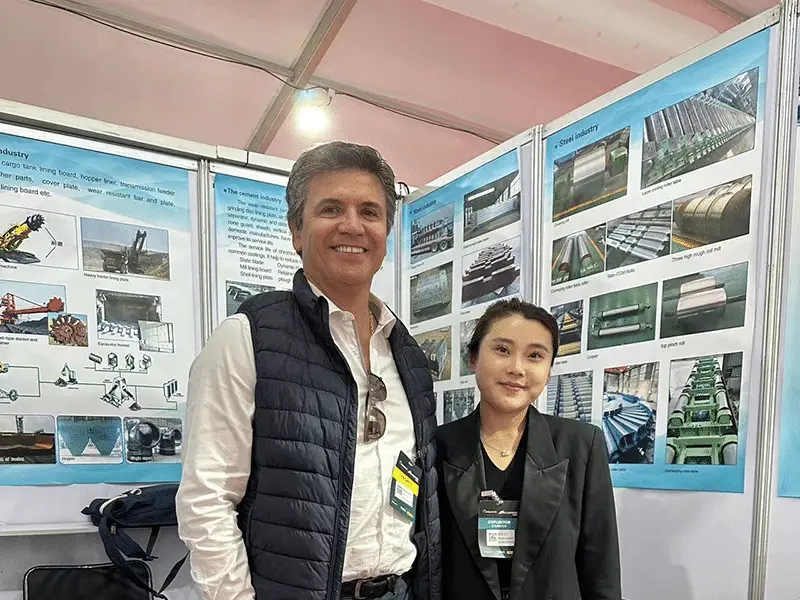
Exhibiting our custom bimetallic overlay wear liners and wear-resistant pipes for severe mining applications in Santiago, Chile.
Read More >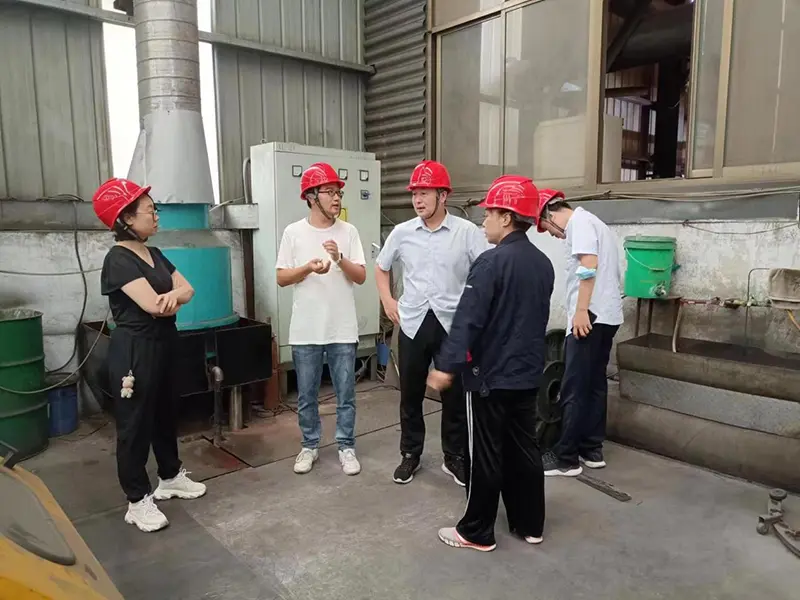
Collaborative research with Tangshan University's Metal Materials and Forming Technology team to advance our surfacing alloys.
Read More >
Our ongoing relationship as a qualified VAUTID agent since 2019 ensures access to high-performance wear-resistant alloys.
Read More >ER70S-6 solid wire is designed for structural joining. It features high levels of manganese and silicon as deoxidizers to create clean weld deposits in carbon steels. In contrast, flux-cored hardfacing wires contain internal flux cores with chromium, carbon, and other micro-alloys. These are engineered to deposit a wear-resistant overlay (often containing chromium carbides) to protect surfaces from abrasion, rather than joining structural elements.
A uniform copper coating improves electrical conductivity and contact tip life. However, if the coating is too thick or poorly bonded, it can peel and flake inside the liner, causing feeding issues and contact tip wear. Our manufacturing processes control the copper coating thickness to ensure stable current transfer and smooth feeding.
Shielding gas affects arc stability, penetration profile, and spatter levels. While pure CO2 provides deep penetration and is cost-effective, using argon/CO2 blends (e.g., 75/25 or 80/20) helps stabilize the arc, reduce spatter, and produce a flatter bead profile, which is beneficial when welding near wear plates.
Our export processes are managed by Hebei Yuwan International Trade Co., Ltd. They handle all export logistics, customs clearance, and payments, allowing our manufacturing facility in Tangshan to focus on quality control and production schedules.
Preventing hydrogen-induced cracking requires managing diffusible hydrogen levels, material stress, and preheat temperatures. Solid wires have low moisture absorption compared to flux-cored wires, helping to minimize hydrogen introduction. Controlling preheat temperatures and using clean welding wires are essential practices for successful welds.
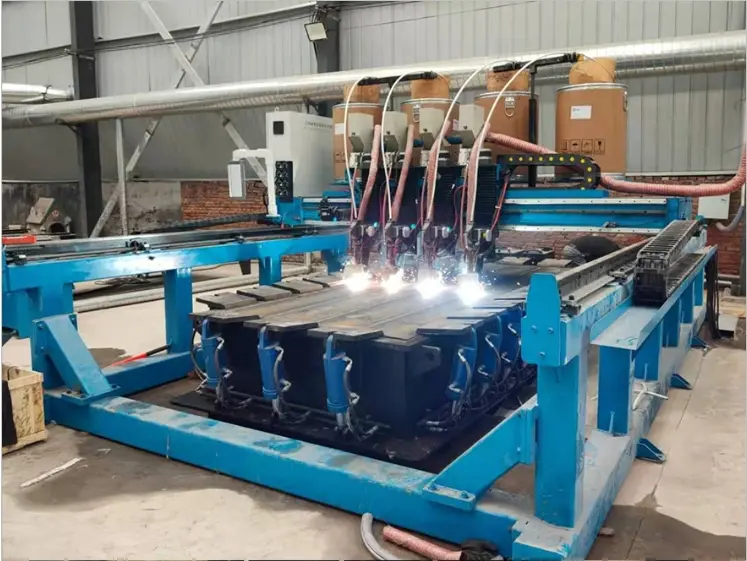
Equipped with advanced CNC controls, touch screens, and adjustable swing welding paths for efficient wear plate production and roller repair.
See More Products >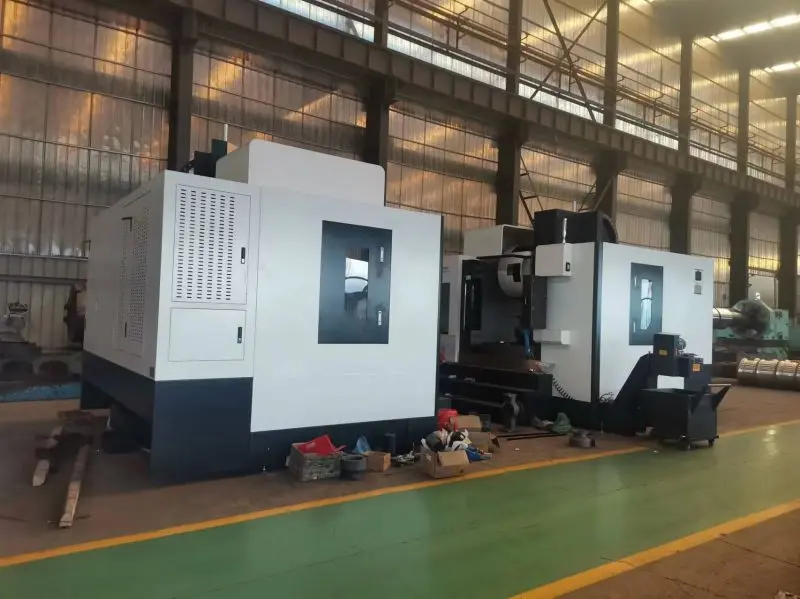
Tailored design and fabrication services for industrial accessories, structural assemblies, and heavy engineering projects.
See More Products >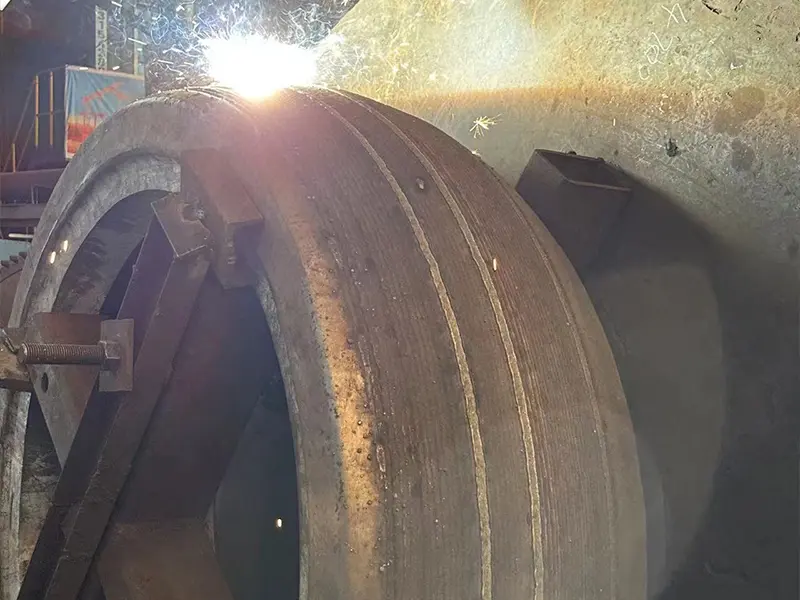
Specialized rebuild services for continuous casting rolls and vertical coal mill rollers, helping to extend service life and reduce operating costs.
See More Products >
Designed for heavy industrial wear protection, offering high deposition rates and consistent chemical composition.
Explore Specifications >
High-hardness overlay plates for high-wear environments, including mining chutes and cement liners.
Explore Specifications >
Standard and custom overlay plates designed to meet specific dimensional and thickness requirements.
Explore Specifications >
High-chromium alloy wires designed to resist high-stress grinding abrasion with low impact.
Explore Specifications >
High-quality composite steel plates featuring a durable overlay structure bonded to a ductile backing steel plate.
Explore Specifications > Runxing machinery