Engineered to withstand extreme abrasion, high-stress impact, and high-temperature environments.
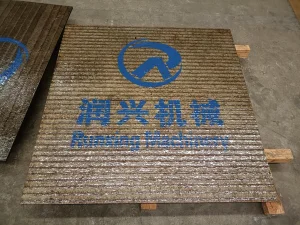
Premium grade CCO composite plate with ultra-hard chromium carbide deposits on a structural base plate. Designed for severe sliding abrasion.
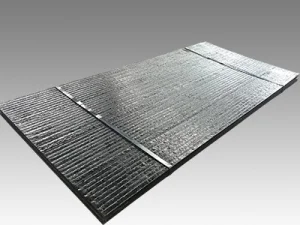
Industrial bimetallic composite steel plates optimized for high-temperature applications and strong structural loading capabilities.
Runxing RX-m series engineered specifically for Mining Cement Chute Liners requiring extreme surface hardness and extended service life.
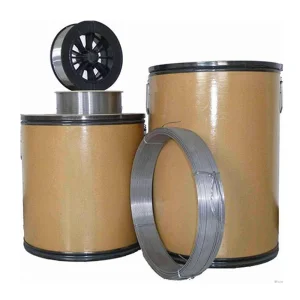
Premium alloy tubular flux-cored wires designed for high-efficiency open-arc and submerged-arc overlay applications on heavy components.
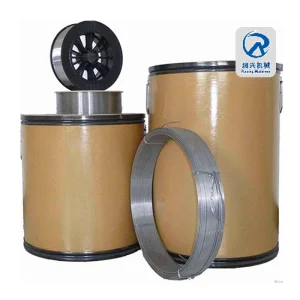
High-chromium alloy self-shielded wire designed for on-site rebuilding, hardfacing, and welding repairs without gas shielding.
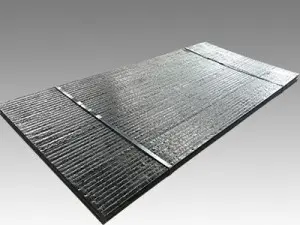
Composite material wear plate made of a structural steel backing & a hard weld surfacing. RX®wp 7600 corresponds to DIN 8555 standards.
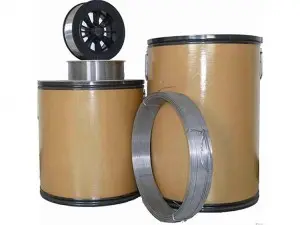
Self-shielded flux cored wire featuring high chromium content designed to resist high-stress grinding abrasion under low-impact conditions.
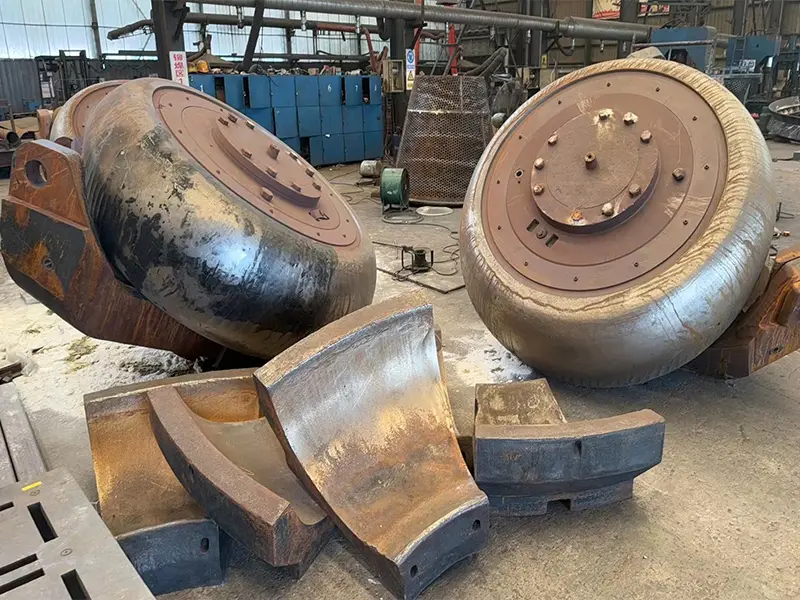
Specialized powder plasma arc cladding materials engineered to deliver optimal metallurgical bond and ultra-high abrasion resistance.
In heavy industrial sectors, including mining, cement, power generation, dredging, and steel production, mechanical wear stands as the single largest contributor to unplanned maintenance costs and equipment downtime. The study of tribology reveals that wear is not a singular phenomenon, but rather a combination of high-stress abrasion, impact-induced micro-spalling, erosion, and thermal oxidation. To counter these destructive forces, advanced surface engineering using Chromium Carbide Overlays (CCO) and automated hardfacing cladding has transition from an optional upgrade to an absolute thermodynamic necessity.
Abrasive wear occurs when hard particles or protuberances slide under force across a metal surface, cutting or plowing micro-grooves. In bulk handling systems, such as chutes, bins, and hoppers, material sliding velocity combined with normal pressure forms a high-abrasion profile. Standard carbon steels (such as Q235 or Q355) yield rapidly under these conditions. The metallurgical solution is to deposit a highly alloyed overlay containing a high volume fraction of primary M7C3 chromium carbides. These hexagonal carbides, with micro-hardness values exceeding 1200 HV, act as structural barriers that shield the ductile matrix from gouging and scratching.
A resilient wear plate must balance two opposing physical properties: hardness and toughness. Standard heat-treated steel plates (like AR400 or AR500) exhibit uniform hardness throughout their thickness, which makes them susceptible to cracking when exposed to impact, or softening when heated above 250°C. In contrast, bimetallic plates feature a structural backing steel plate welded to a chromium-carbide-rich cladding. The base plate provides weldability, structural integrity, and shock absorption, while the outer overlay offers relentless resistance to wear. Under microscopic analysis, the clad layer reveals a dense distribution of primary carbides within a supportive, tough austenitic matrix, ensuring that impact energy is dispersed without triggering catastrophic failure.
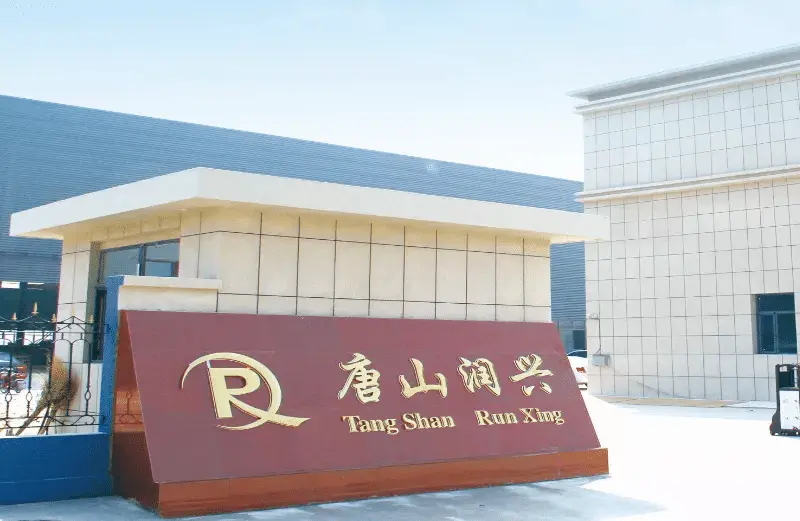
Founded in 2010 and based in the industrial hub of Tangshan, Hebei Province, Tangshan Runxing Machinery Co., Ltd. has established itself as an authoritative manufacturer specializing in the R&D, manufacture, and on-site repair of advanced surface hardfacing alloys. Spanning over a decade of continuous metallurgical innovation, our production methodologies adhere to strict DIN and ASTM global criteria.
We operate a fully integrated supply chain, engineering customized solutions including chromium carbide overlay (CCO) wear plates, wear-resistant pipe systems, flux-cored welding wires, and automatic CNC surfacing machinery. To guarantee smooth global transactions, all export activities are managed by our authorized partner, Hebei Yuwan International Trade Co., Ltd., which coordinates customs clearance, maritime logistics, and compliant international trade payments.
China has grown to become the world’s leading hub for hardfacing material synthesis and manufacturing. The industrial cluster in Hebei Province provides structural advantages that benefit international buyers in terms of lead times, technological precision, and material value:
How global industries integrate bimetallic cladding to protect high-cost capital assets.
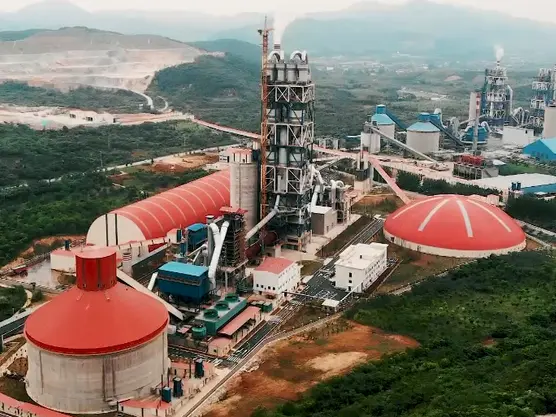
Protects critical components like limestone crushing hoppers, vertical roller mill (VRM) bodies, separator guide vanes, and raw meal chutes from severe continuous rock abrasion.
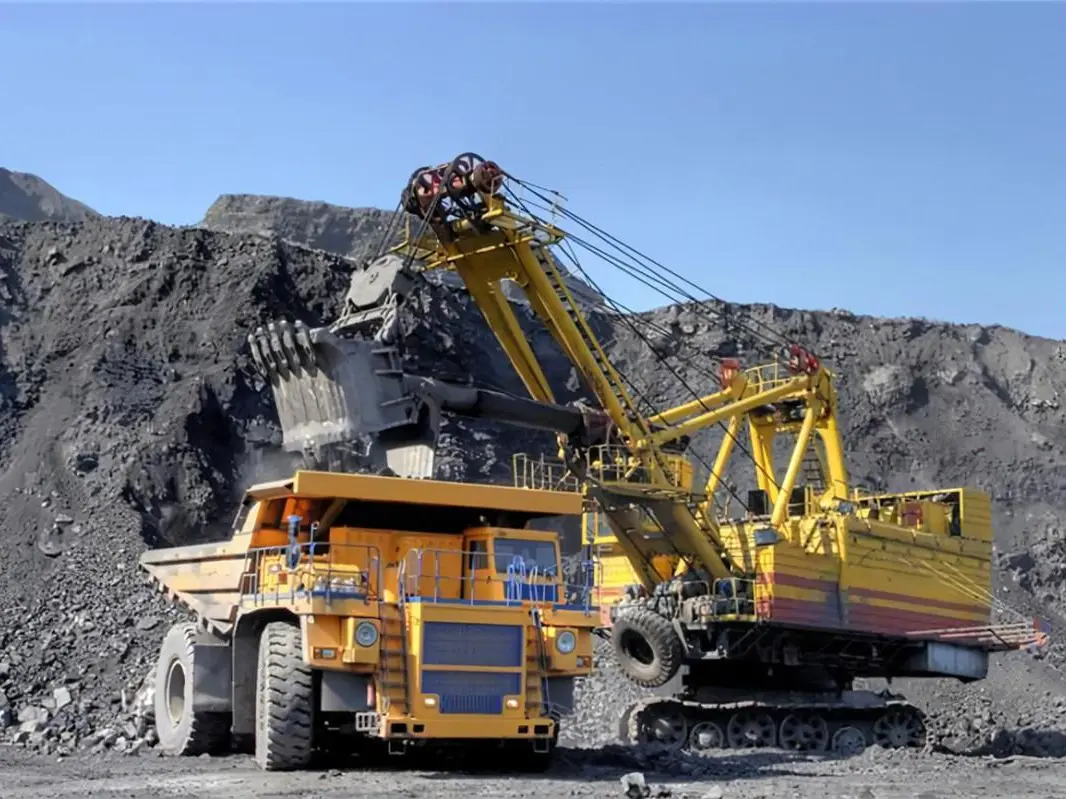
Provides impact and high-stress wear resistance for excavation buckets, dump truck beds, hopper liners, slurry pipes, and transfer chutes carrying aggressive quartzites and ores.
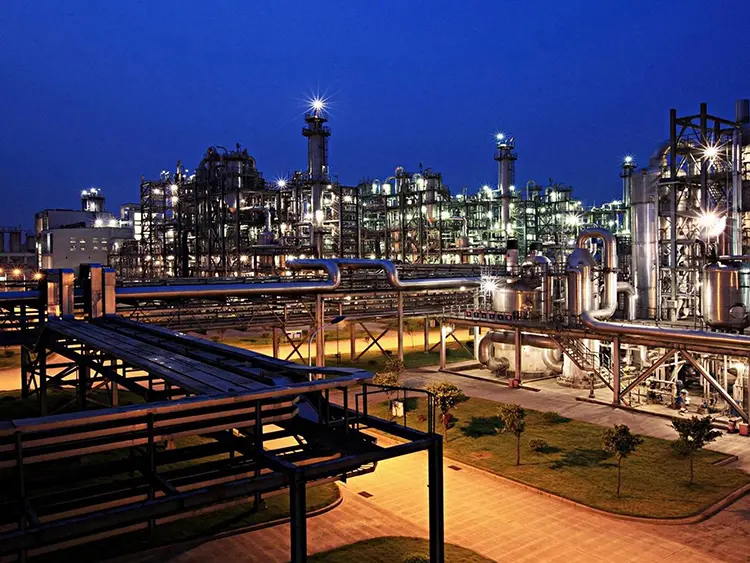
Withstands thermal cycling and mechanical wear in sintering plant star wheels, coke handling systems, blast furnace distribution chutes, and guide plates.
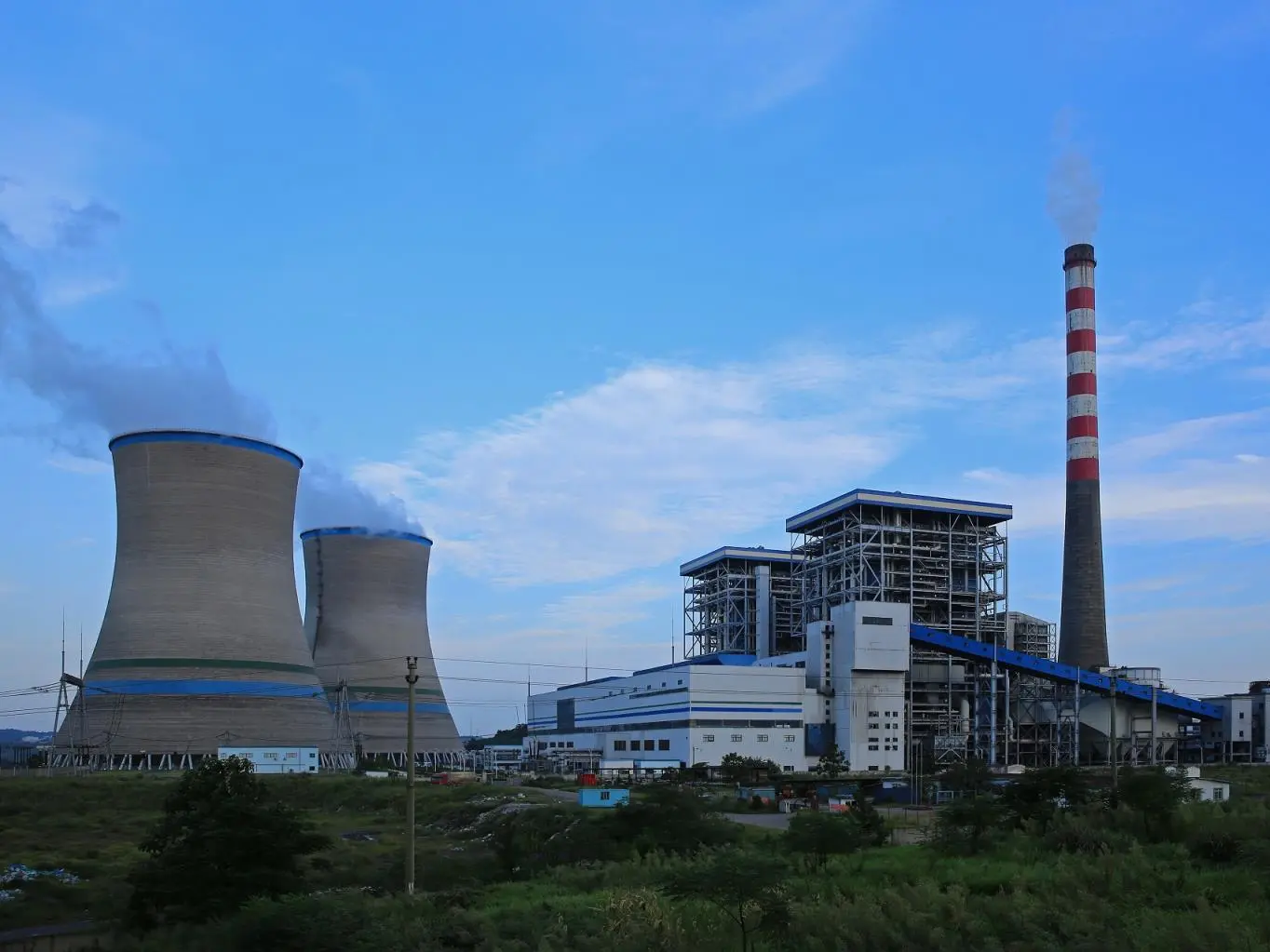
Applied to fan blades, conveyor hoppers, pulverized coal mills, exhausters, dust extraction ducts, and ash transport lines subject to high-velocity particle erosion.
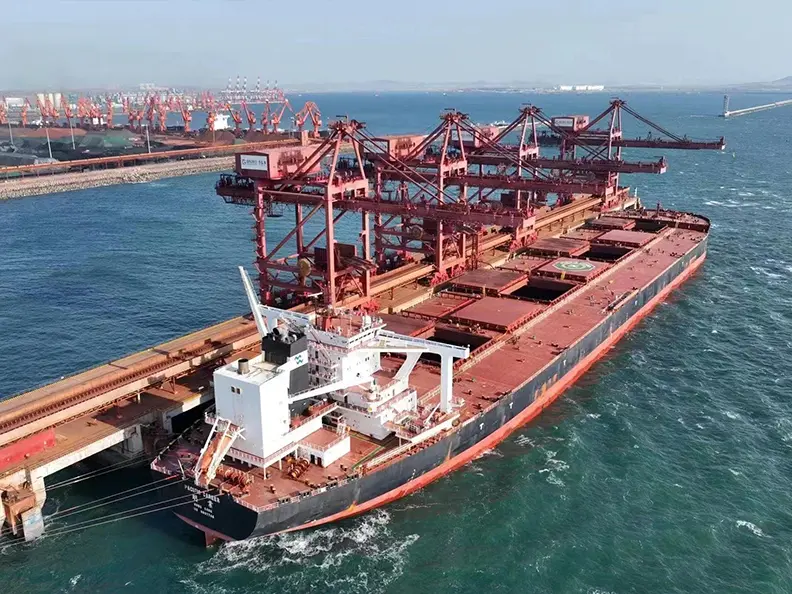
Shields high-capacity grab buckets, transfer bins, hopper gates, and belt conveyor chutes from corrosive sea environments and continuous abrasive friction.
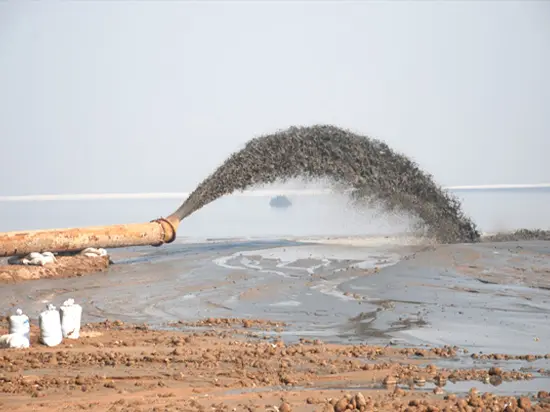
Includes high-purity superfine alumina ceramic tiles sintered at high temperatures. Offers excellent acid/alkali resistance and smooth material slide dynamics.

Ongoing research in complex borocarbide compositions and super-alloy overlays to address combined corrosion-wear profiles in heavy chemical processing plants.

Integrating sensors and digital wear tracking systems to monitor residual sheet thickness in hazardous zones, enabling predictive maintenance planning.
Global procurement specialists from OEM equipment manufacturers require partners that can meet stringent quality control standards. When sourcing bimetallic wear materials, procurement audits focus on several key metrics to verify E-E-A-T and assure mechanical reliability:
During the welding deposition process, the overlay alloy melts and mixes with the base steel. This dilution introduces iron into the cladding, which can lower carbon and chromium concentrations. Advanced factories control the dilution rate below 10% through precise control of the welding arc, voltage, and torch speed. This guarantees that the surface layer maintains its target chromium carbide configuration.
A common concern for inspectors is the presence of crack patterns on the cladding surface. These cracks are stress-relief fractures that form naturally as the weld metal cools. These relief cracks should distribute evenly throughout the cladding layer, but must stop at the base plate interface without penetrating the structural substrate. This ensures structural strength and prevents delamination during fabrication or operation.
Procurement audits require systematic chemical composition checks of the cladding (typically targeting 3.5%–5.5% Carbon and 25%–35% Chromium). Hardness testing using the Rockwell scale (typically HRC 58-65) is performed across the plate surface, along with ASTM G65 dry sand/rubber wheel testing to verify wear rates under lab conditions.
As the heavy machinery industry shifts toward automation and decarbonization, wear-resistant manufacturing is adapting through several key advancements:
Tracking Tangshan Runxing Machinery’s active presence in global metallurgical conferences and academic research.
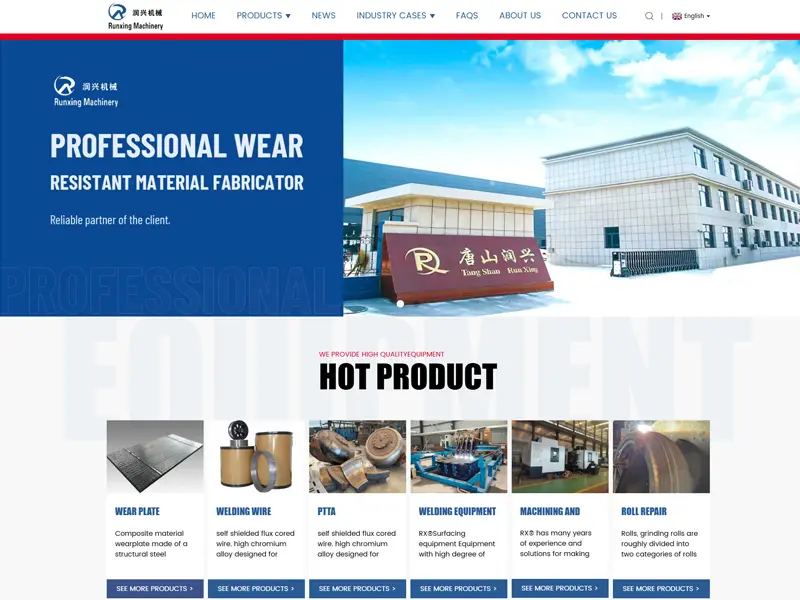
Tangshan Runxing Machinery Co., Ltd. has launched its updated web portal (www.runxing-machinery.com) to provide dynamic technical documentation, product catalogs, and metallurgical whitepapers for engineering partners worldwide.
Runxing displayed its high-hardness CCO wear plates and automatic cladding equipment at Johannesburg, South Africa, establishing key partnerships with mining enterprises across sub-Saharan Africa.

Yuan Shaoqiang, Dean of Tangshan University, and metal materials research teams inspected Runxing's facility to collaborate on refining carbide crystallization during high-speed cladding processes.

Runxing continues its long-term partnership with VAUTID, integrating premium German welding alloys into high-stress overlay products and on-site roller rebuilding projects.
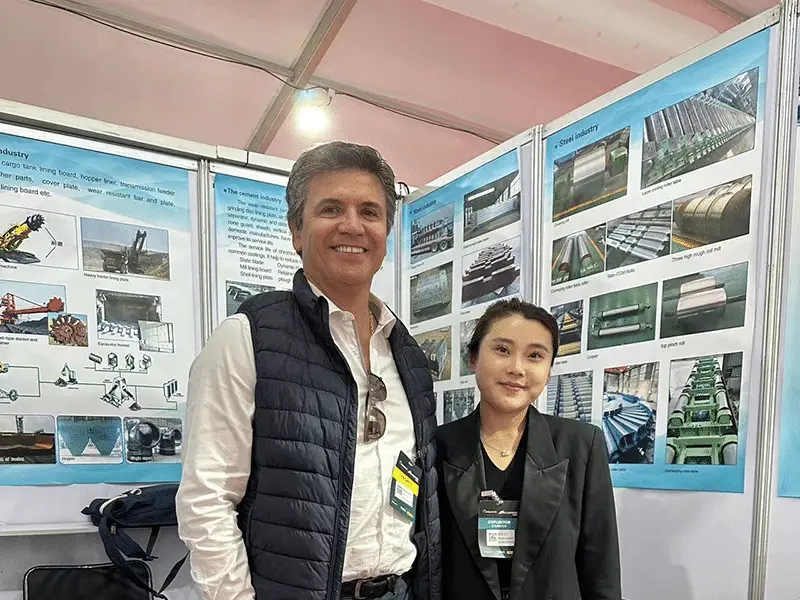
Exhibiting at Santiago, Chile, Runxing presented its specialized wear liners and hardfacing flux-cored wires designed for high-altitude copper and iron ore mining applications.
Expert answers addressing the physics, manufacturing, and sourcing of chromium carbide overlays.
No, these surface cracks are stress-relief cracks. Because of the thermal expansion difference between the alloy cladding and the carbon steel backing, these cracks form naturally to release residual stress as the weld metal cools. These relief cracks should distribute evenly and must stop at the base plate interface without extending into the structural base steel.
A standard high-performance CCO plate contains 3.5% to 5.5% Carbon (C) and 25% to 35% Chromium (Cr). This ratio forms a dense volume fraction of primary M7C3 chromium carbides (typically over 30%) embedded within an iron-rich austenitic matrix.
Yes. The structural base plate (often Q235B or Q345B) provides structural weldability and ductility. The composite sheet can be rolled with the cladding on either the inner or outer surface, and can be welded to structures using standard low-hydrogen structural electrodes on the carbon steel backing.
Partnering with VAUTID Germany gives us access to advanced metallurgical formulations, premium alloy raw materials, and specialized training. This helps us maintain consistent wear and heat resistance properties for our high-stress overlay products.
We perform surface inspections and hardness checks (HRC scale), along with ultrasonic testing (UT) to inspect the bond line. We also conduct wet and dry chemical analysis to confirm alloying element ratios and ASTM G65 tests to measure wear performance.
All exports are processed through our authorized partner, Hebei Yuwan International Trade Co., Ltd. They manage customs clearance, export declarations, sea freight logistics, and compliant international trade payments, helping ensure timely delivery.
A comprehensive range of wear plates, specialized welding consumables, and automated rebuild systems.
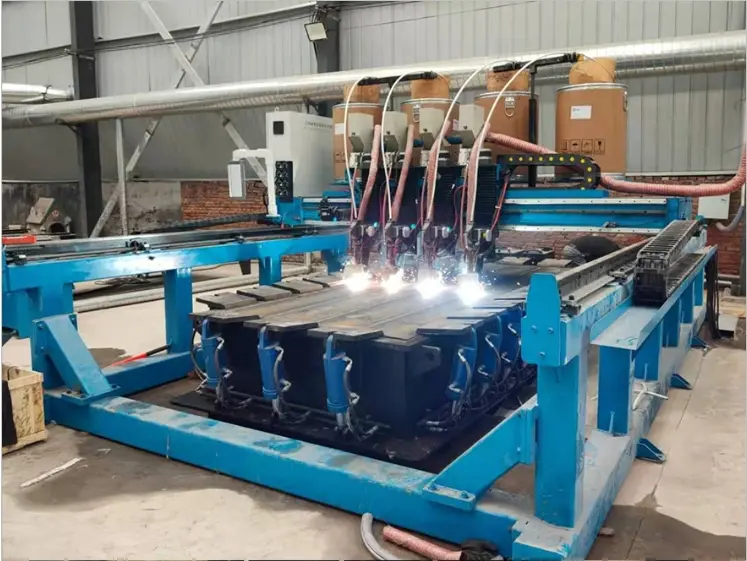
Automated surfacing systems featuring a 10.2-inch CNC touch screen and 4 welding guns operating simultaneously for high-efficiency wear plate fabrication.
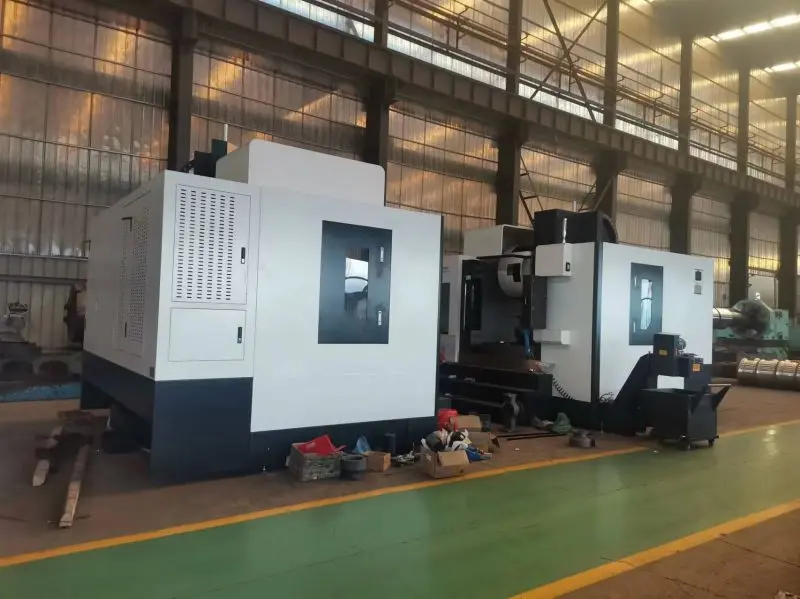
Custom structural engineering, CNC plate cutting, press-brake bending, and fabrication services for complex wear-resistant industrial systems.
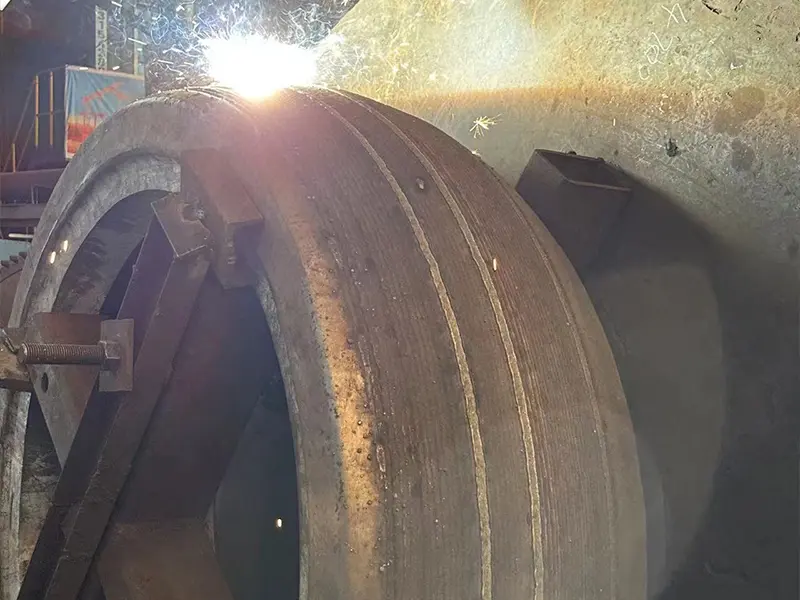
Rebuilding and repair services for grinding rolls, table segments, and continuous casting rollers using specialized sub-arc wire overlays.
Premium grade CCO composite plate with ultra-hard chromium carbide deposits on a structural base plate. Designed for severe sliding abrasion.
Industrial bimetallic composite steel plates optimized for high-temperature applications and strong structural loading capabilities.
Runxing RX-m series engineered specifically for Mining Cement Chute Liners requiring extreme surface hardness and extended service life.
Premium alloy tubular flux-cored wires designed for high-efficiency open-arc and submerged-arc overlay applications on heavy components.
High-chromium alloy self-shielded wire designed for on-site rebuilding, hardfacing, and welding repairs without gas shielding.









 Runxing machinery