Runxing machinery
The Physics of Tribological Wear and the Rise of CCO Plates
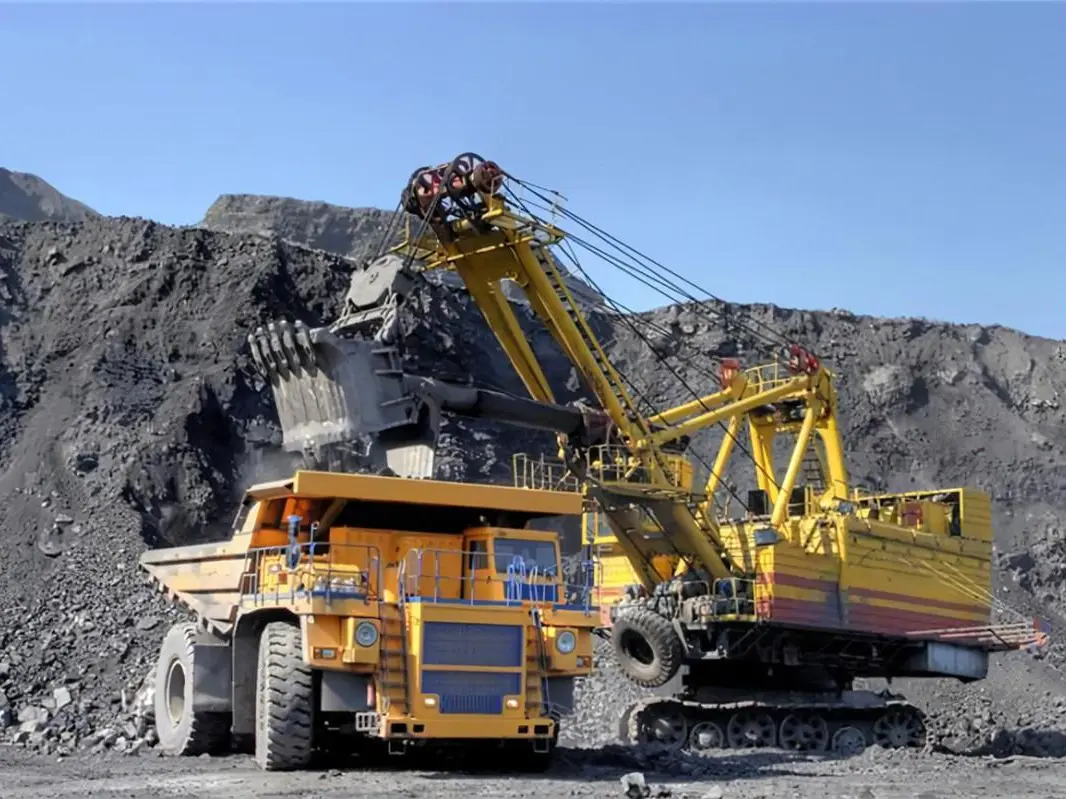
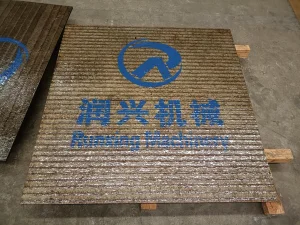
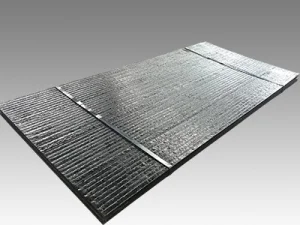
In modern industrial processes, mechanical components in sectors like mining, cement, iron & steel, power generation, and port bulk material handling operate under continuous high-abrasion and impact environments. Standard mild steel or heat-treated structural steels cannot cope with the sheer abrasive kinetics of geological ores and minerals. To solve this wear challenge, the implementation of Chromium Carbide Overlay (CCO) wear plates and advanced hardfacing metallurgy has become the industry standard for optimizing total cost of ownership (TCO) and avoiding catastrophic equipment downtime.
Understanding Wear Mechanics: Two-body vs. Three-body Abrasion
Abrasive wear primarily manifests in two regimes: two-body abrasion, where a hard surface slides against another surface, and three-body abrasion, where loose, hard abrasive particles (such as quartz, sinter, clinker, or coke) flow between two moving surfaces. The rate of volumetric metal loss depends on the relative hardness of the abrasive media ($H_a$) compared to the surface hardness of the metallic component ($H_s$). When the ratio $H_a / H_s$ exceeds 1.2, catastrophic scratching, micro-ploughing, and plastic deformation accelerate. By depositing a dense overlay of primary $M_7C_3$ chromium-rich carbides onto structural backings, the surface hardness increases up to HRC 58-62 (with individual micro-carbides measuring up to 1200-1600 HV), changing the ratio to $H_a / H_s < 1.0$ and shifting the wear regime to mild elastic contact.
| Wear Type | Main Industrial Causes | Standard Wear Mechanism | Best Mitigation Metallurgy |
|---|---|---|---|
| High-Stress Grinding | Crushers, vertical mills, grinding rolls | Micro-crushing and surface shear stress | Hypereutectic high-chromium alloy (HRC 58-62) |
| Low-Stress Sliding | Chute liners, hoppers, conveyor plates | Micro-ploughing and continuous scratching | Medium-carbide density CCO wear plate (DIN 8555) |
| Severe Impact Abrasion | Grizzly screen bars, primary chute impact zones | Brittle spalling, impact micro-cracking | Complex carbide alloys (Nb, V, W, Ti addition) |
Global Sourcing & Procurement Demands for Premium Mining Steel
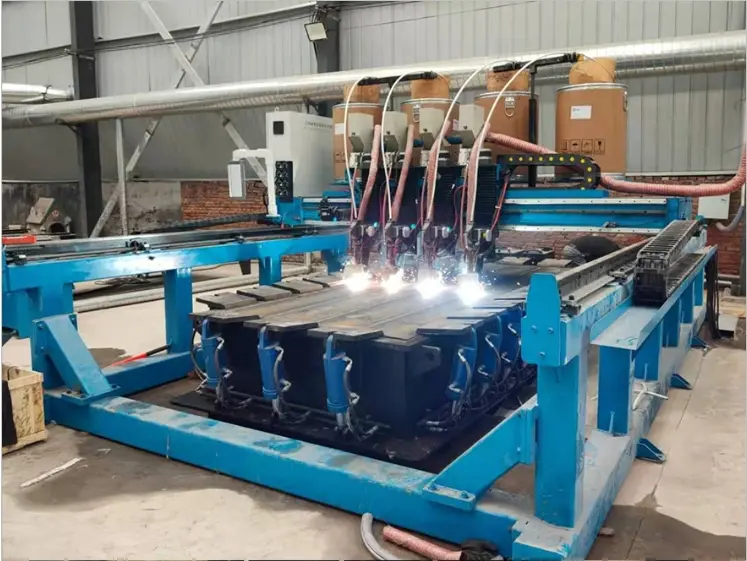
Global resource conglomerates face complex logistical, technical, and regulatory challenges. When sourcing wear plates and hardfacing materials, procurement managers look for manufacturers that can supply both stable metallurgical quality and robust international trading capabilities. Tangshan Runxing Machinery Co., Ltd., situated in Hebei Province, meets these demands. Runxing operates a manufacturing setup utilizing CNC-controlled multi-gun automatic overlay cladding systems to guarantee uniform bead chemistry and structural consistency.
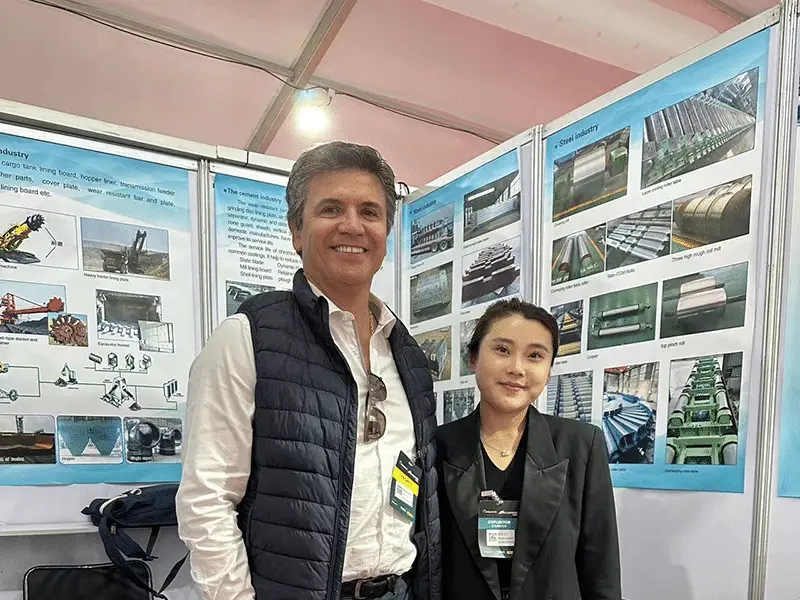
To streamline global supply chains, all international transactions and operations are managed through Hebei Yuwan International Trade Co., Ltd. This arrangement ensures that customs clearance, shipping documentation, and multi-currency payments are executed professionally, allowing the manufacturing facility to focus on metallurgy, production control, and R&D. With qualified agents representing the company in heavy industrial markets across Central Asia, Eastern Europe, and Africa, Runxing delivers optimized wear parts for large-scale mining applications worldwide.
China Industry 4.0: Supply Chain Resilience & Smart Cladding
The manufacturing infrastructure of Tangshan Runxing Machinery Co., Ltd. represents the integration of digital CNC technology and automated metallurgical overlay processes. Our factory's automatic hardfacing welding machines utilize high-degree automation, small footprints, and optimized power consumption. The digital numeric control systems, operated via a 10.2-inch touch screen, allow for adjusting speed swing parameters, wide or narrow welding paths, and current inputs. These automated configurations prevent manual welding variances that lead to base metal dilution.
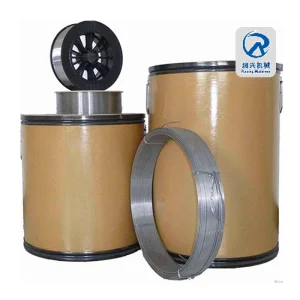
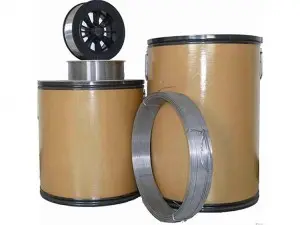
Our four-gun configuration operates simultaneously or independently, applying self-shielded flux-cored wire, open-arc, plus-powder, or submerged-arc weld overlays. This adaptability enables the cost-efficient production of bimetallic chromium carbide wear plates and specialized roller repairs. Our partnerships with European technology standards—including being a qualified agent for VAUTID in Germany for six consecutive years—demonstrate our capability to deliver wear products that meet international standards.
R&D and Academic Collaboration
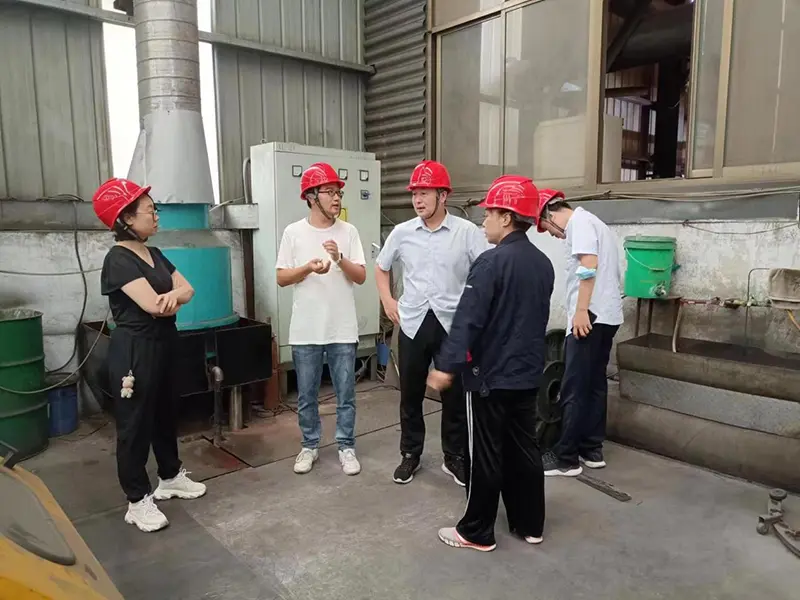
Runxing works to bridge academic research and industrial manufacturing. In 2023, the leadership and research staff of Tangshan University—led by Dean Yuan Shaoqiang, Vice Dean Li Jing, and Professor Yang Yuehui (Team Leader of Metal Materials and Forming Technology)—visited our plant to conduct research on next-generation metal surface hardfacing formulations. This collaborative framework ensures that our wear plates and welding wires are optimized for wear life under tough industrial conditions.