Runxing machinery
Industry Whitepaper
The Engineering Chemistry and Global Sourcing Economics of Welded Core Systems
1. Global Heavy Industrial Wear Trends & The Evolution of Welded Cores
In modern extractive, manufacturing, and energy production sectors, the degradation of mechanical surfaces due to high-stress abrasion, impact, erosion, and thermal fatigue is a major contributor to unplanned downtime and high Total Cost of Ownership (TCO). Historically, industries relied heavily on homogeneous quench-and-tempered (Q&T) steel plates (such as AR400 or AR500 grades). While these steels provide structural strength, they often fall short in high-temperature or extreme grinding environments.
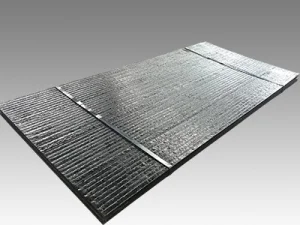
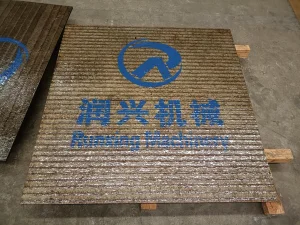
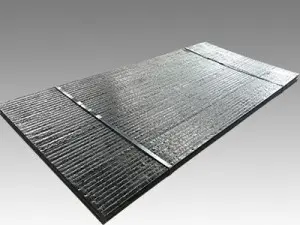
This limitation has driven the development of **Welded Core technology** and **Chromium Carbide Overlays (CCO)**. By welding a highly alloyed core material containing chromium, carbon, and other refractory metals (like niobium, tungsten, or vanadium) onto a structural steel substrate, engineers can separate structural loads from wear-resistant requirements. The resulting composite weld overlay consists of primary chromium-rich carbides ($Cr_7C_3$) embedded in a tough, eutectic matrix. This dual-phase structure provides excellent resistance to sliding abrasion, while the ductile backing plate absorbs the mechanical impact and allows for easy fabrication, bending, and installation.
2. Understanding the Chemistry: How Primary Carbides Solve Sliding Abrasion
The performance of a bimetallic CCO plate is determined by its microstructure. During the automated surfacing process, the chemical composition of the flux-cored wire and the cooling rate of the weld pool determine the formation of chromium carbides. Ideally, the microstructure should exhibit a high volume fraction of primary $Cr_7C_3$ carbides (typically with a micro-hardness exceeding 1200 HV) oriented perpendicular to the wear surface. This orientation acts as a barrier to abrasive particles, such as quartz, iron ore, and clinker, preventing them from gouging the surface.
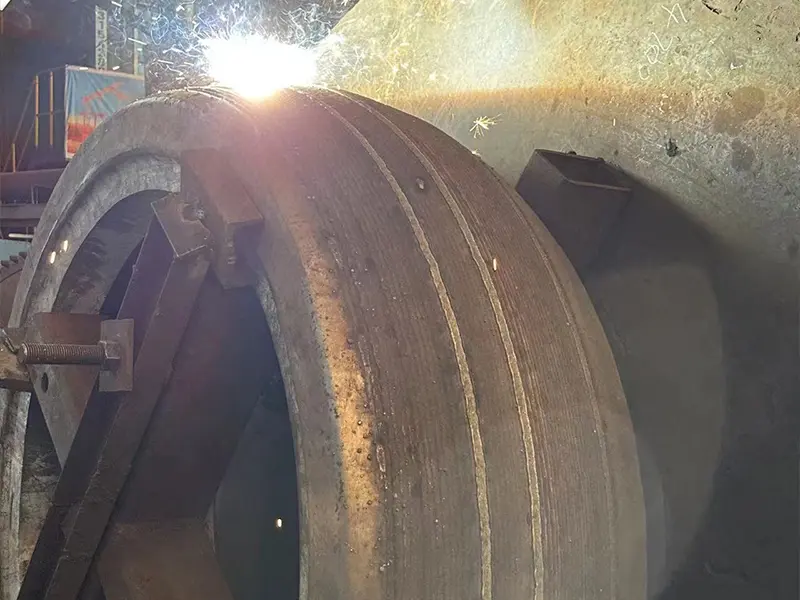
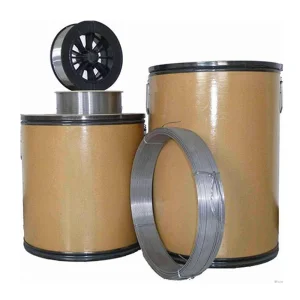
Runxing’s proprietary metallurgical formulations ensure that the dilution from the base steel is carefully controlled. Standard hardfacing overlays often suffer from iron dilution, which reduces carbon and chromium levels near the fusion line. Our advanced robotic overlay machines utilize tight electrical parameter controls to deposit high-alloy overlays with minimal base metal dilution, achieving a consistent hardness profile of 58–62 HRC from the surface down to the interface zone.
3. Global Sourcing Trends & Procurement Standards
Global industrial procurement departments are transitioning from a transactional purchasing model to a life-cycle cost analysis approach. When sourcing welded core components or wear plates, procurement managers must evaluate several technical criteria:
- Microstructural Quality: The volume fraction of primary chromium carbides should be between 30% and 50% for optimal abrasion resistance.
- Conformance to DIN 8555 Standards: Standardized classification (e.g., DIN 8555 MF10-60-G) is critical to verify deposit chemistry and expected wear performance.
- ASTM G65 Dry Sand Rubber Wheel Abrasion Test: This standardized test offers a reliable measure of mass loss, enabling accurate performance comparison across different manufacturers.
- Base Steel Weldability and Formability: Backing materials like Q235B or A36 ensure that the composite plates can be rolled or welded onto existing structures without cracking.
4. China Factory 4.0: Supply Chain Resilience and Advanced Metallurgy
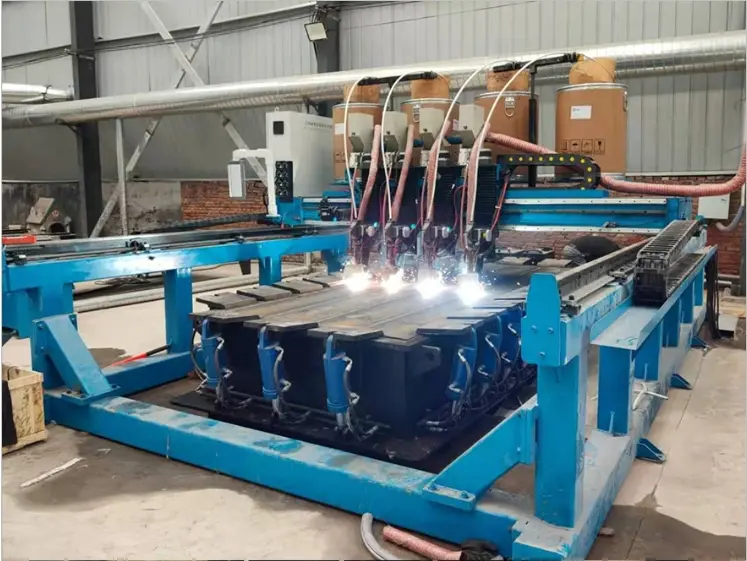
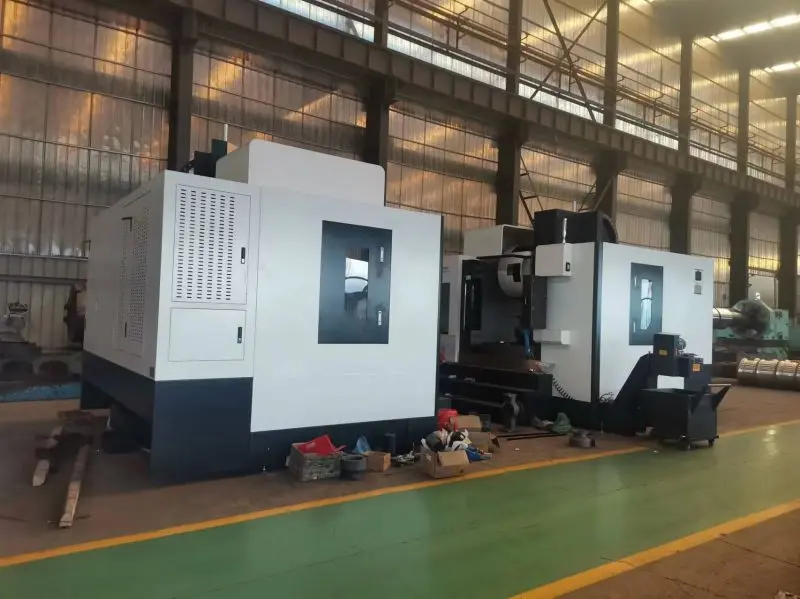
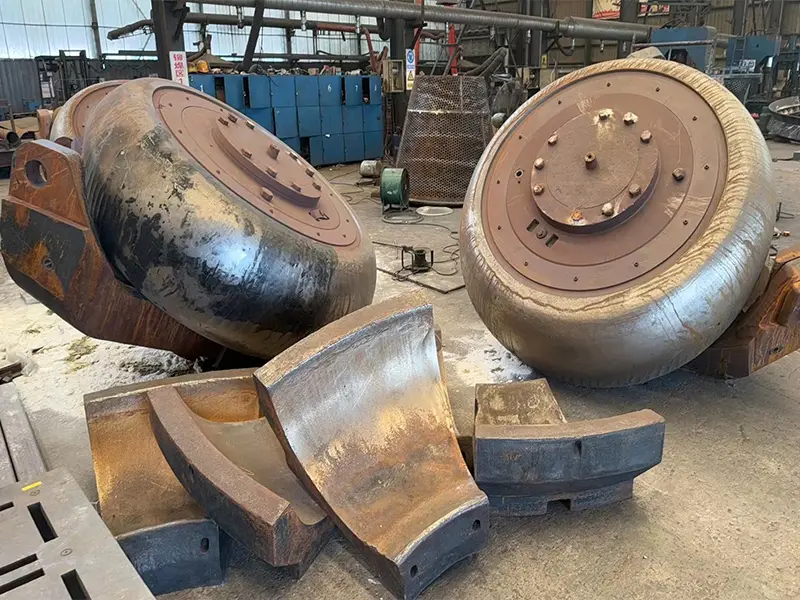
Located in Hebei Province, Tangshan Runxing Machinery operates at the center of China’s steel production and metallurgical research corridor. By leveraging local supply chains for steel substrates and high-purity ferroalloys, we maintain stable raw material pricing and availability. Our facility utilizes semi-automated and fully automated surfacing stations, equipped with multi-gun welding heads and advanced numeric control systems.
This automated manufacturing approach guarantees consistent weld bead profiles, uniform thickness distribution, and minimal distortion in our composite wear plates. Additionally, our partnership with Hebei Yuwan International Trade Co., Ltd. ensures smooth logistics, customs clearance, and global payment compliance, providing international buyers with reliable lead times and transparent logistics tracking.