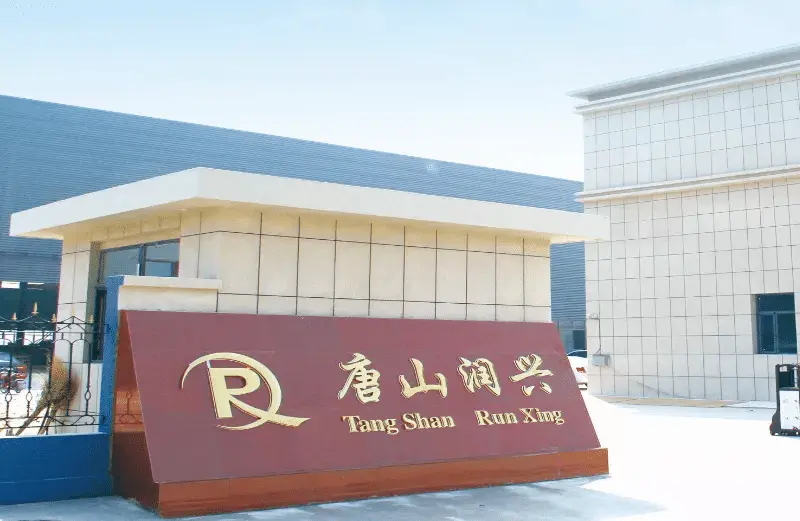
Engineered to counter severe grinding, abrasion, and impact in industrial workflows.
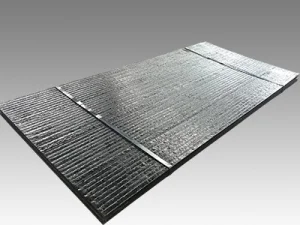
Engineered with heavy-duty bimetallic cladding to survive extreme wear and sliding abrasion.
Explore Specifications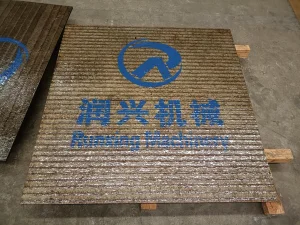
Custom tailored dimensions and chemistry optimized for specific heavy-duty equipment configurations.
Explore Specifications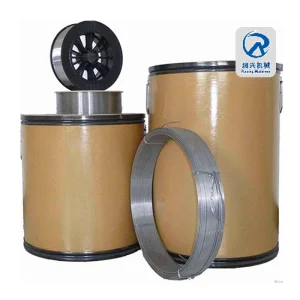
Formulated for open arc welding, delivering precise alloy deposit structures without external shielding gas.
Explore Specifications
Customized lining panels for mining cement chutes, boasting supreme chromium carbide distribution.
Explore Specifications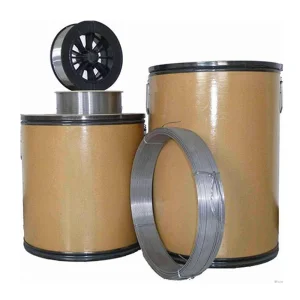
Optimized wires for vertical mill rollers and rebuild work, guaranteeing structural repair integrity.
Explore Specifications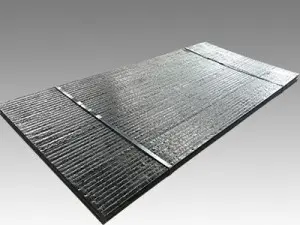
Bimetallic structural backing with hard weld surfacing. Compliant with DIN 8555 for global standards.
Explore Specifications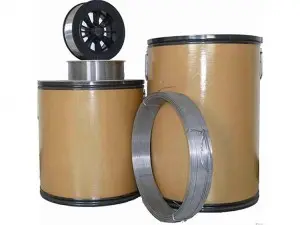
Engineered for high stress grinding abrasion and low impact resistance contexts.
Explore Specifications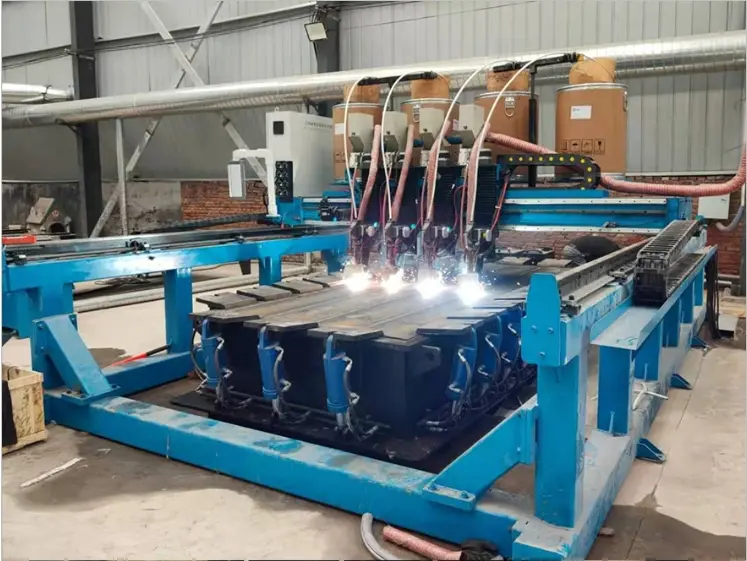
Advanced numerical control systems, uniform swing welding mechanism, and multi-gun simultaneous work.
Explore SpecificationsIndustrial wear is an expensive failure mode for heavy machinery across operations in cement, mining, power generation, and iron processing. To address this, the wear plate manufacturing process acts as a critical field of materials science. The production of Chromium Carbide Overlay (CCO) plates involves metallurgically bonding an abrasion-resistant, hyper-eutectic alloy layer onto a structural, weldable steel substrate (usually carbon steel or low-alloy steel).
Through state-of-the-art open-arc or submerged-arc hardfacing technologies, the chromium-rich powder or flux-cored wire is fused to the base steel. Under extreme heat, the chemistry produces M7C3 primary carbides, oriented perpendicular to the surface. These hexagonal carbides reach hardness levels exceeding 1500 HV, providing a shield against severe grinding stress. This structural backing allows the composite plate to absorb impact loads while preventing brittle failure, creating an optimal combination of toughness and hardness.
Traditional wear-resistant steel plates rely on quench-and-temper heat treatments (such as standard AR400 or AR500 steel). While useful, these monolithic alloys display limited wear protection under intense abrasive dynamics. The modern chromium carbide overlay manufacturing process relies instead on chemical composition control. High-quality overlays feature a carbon content between 4.0% to 5.5% and a chromium concentration between 25% and 35%. This high concentration ensures that the primary chromium carbides crystallize first, creating a dense network that shields the softer matrix.
An essential feature of this manufacturing process is the development of superficial stress relief cracks. These hairline cracks form naturally during cooling as the weld deposit contracts faster than the carbon steel backing plate. These cracks relieve residual thermal stress, ensuring that the bimetallic sheet remains flat and can be rolled, bent, and fabricated into complex configurations without peeling or spalling from the substrate.
How Tangshan Runxing Machinery integrates supply chain scale, metallurgy expertise, and automated technology.
Based in Tangshan, Hebei Province—the heart of China's steel industry—Runxing Machinery maintains reliable access to high-grade steel substrates. This close proximity reduces logistics overheads and ensures stable materials supply chain integration.
For six consecutive years, Runxing Machinery has served as a qualified agent for Germany's renowned VAUTID brand. This partnership has helped us incorporate advanced German standards, high-quality welding materials, and strict QA protocols directly into our Chinese operations.
Through our fully authorized trading partner, Hebei Yuwan International Trade Co., Ltd., we manage export customs clearance, maritime logistics, and payment processing, allowing our production plants to focus on manufacturing quality.
A trusted name in metal hardfacing and wear-resistant machinery design since 2010.
Tangshan Runxing Machinery Co., Ltd., established in 2010 in Tangshan, Hebei Province, specializes in the R&D, production, and on-site service of hardfacing wear-resistant metal products.
Our product line includes chromium carbide overlay (CCO) wear plates, custom fabricated wear liners, hardfaced steel pipes, hardfacing flux-cored wires, automatic welding equipment, and specialized mill roller repair services. Built on the core values of "Integrity, Superior Quality, Innovation & Sustainable Development," we leverage advanced metal surfacing technology to serve heavy industry worldwide.
Our team develops tailored, long-lasting wear-resistant solutions for cement kilns, mining machinery, steel mills, power generation facilities, and dredging ports, building a strong market presence across Russia, Central Asia, and Africa.
Discover how our customized hardfacing solutions resolve wear challenges across diverse operations.
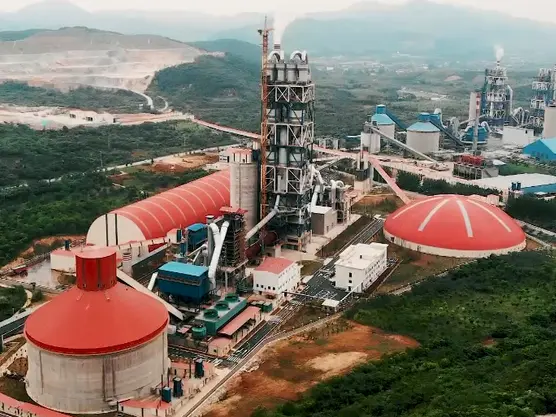
Kiln operations require reliable, wear-resistant parts. Customized CCO plates extend the operating life of raw meal chutes, separator guide vanes, and vertical mill liners.
View Solutions >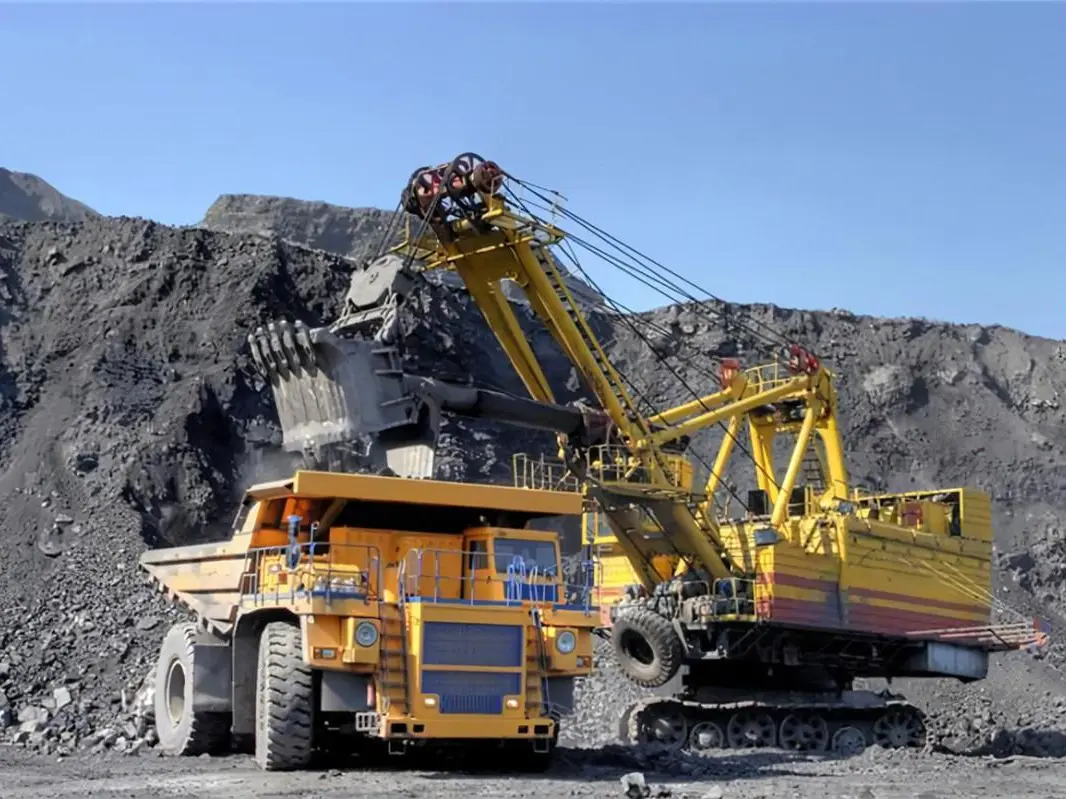
Heavy machinery handling hard rock faces continuous, severe impact. Our chromium carbide plates and hardfacing wires protect shovel buckets, dump trucks, and hopper walls.
View Solutions >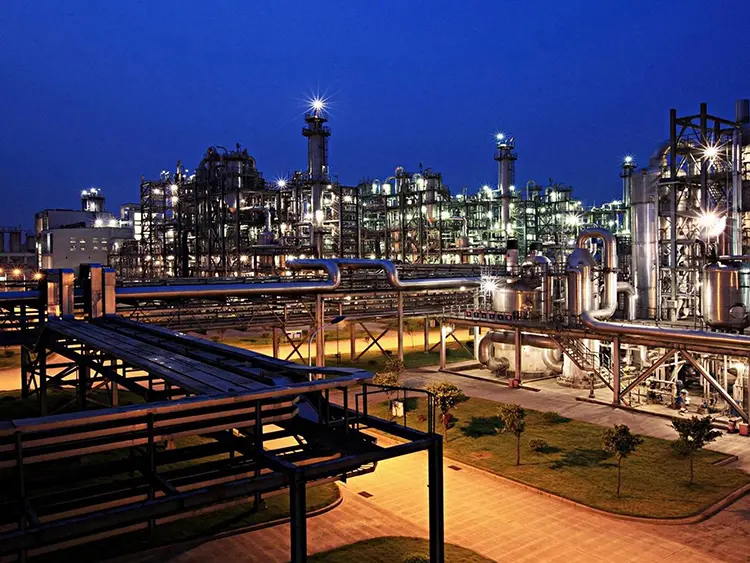
Sintering plants and blast furnace bunkers operate under high-temperature abrasive wear. Our high-carbon bimetallic overlays are engineered to maintain structural integrity in hot zones.
View Solutions >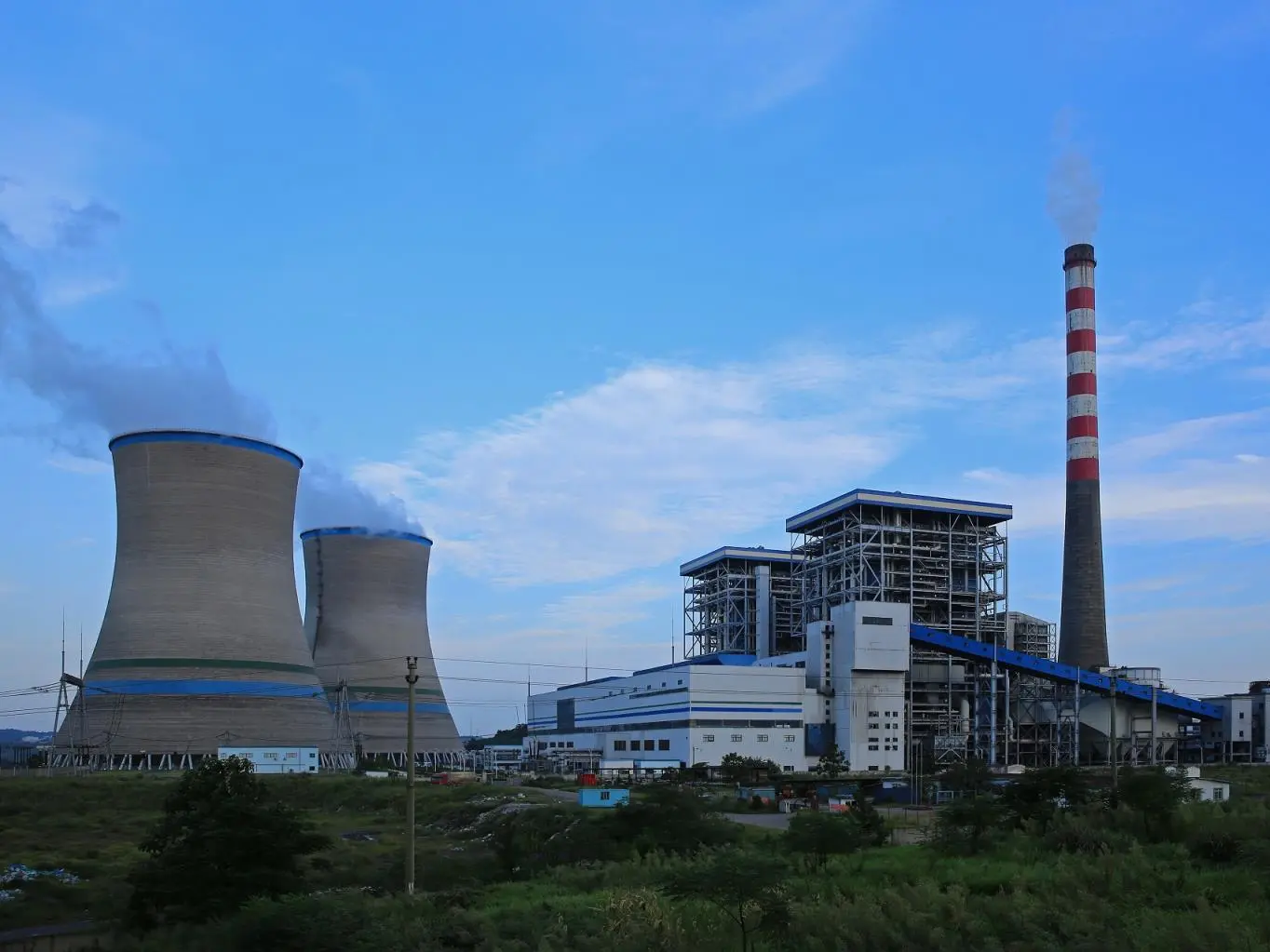
Protecting coal pulverizer feed pipes, exhauster fan blades, and coal handling hopper liners. These parts are designed to reduce maintenance outages in thermal power generation.
View Solutions >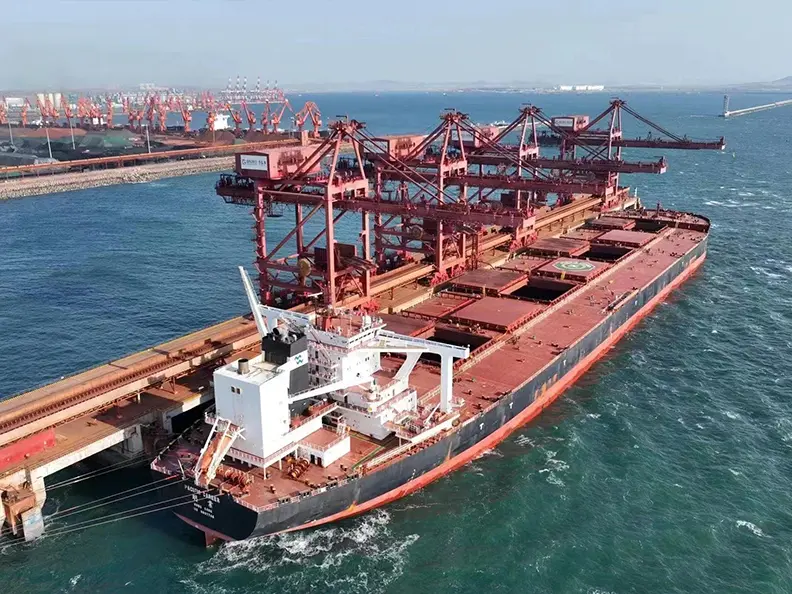
Marine environments require both impact and corrosion resistance. Our wear liners protect hopper discharge systems, dragheads, and clamshell bucket edges.
View Solutions >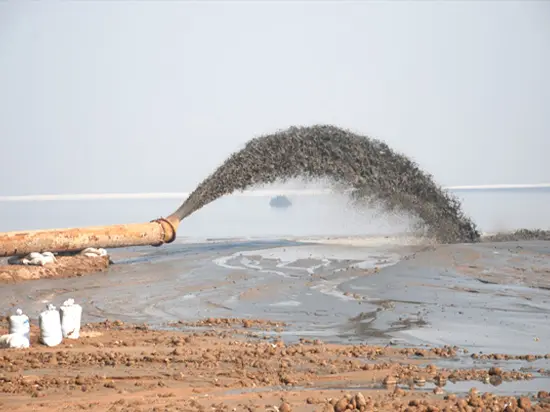
For high-velocity sliding wear, we offer high-purity sintered alumina ceramics that complement our CCO plates in extreme processing environments.
View Solutions >
Reclaiming worn vertical cement rolls and table segments using automated welding systems and custom-alloy hardfacing wires to restore original profiles.
View Solutions >
Providing specialized fabrications, including wear-resistant piping manifolds and customized chutes, configured directly from customer CAD drawings.
View Solutions >The global hardfacing industry is transitioning from manual, labor-intensive welding processes toward digitalized automation. Automated hardfacing systems ensure consistent deposition speed, precise temperature controls, and uniform chemical profiles. The wear plate manufacturing process increasingly utilizes multi-arc configurations, which double production speeds while maintaining minimal dilution. This ensures that the primary chromium carbides remain highly concentrated right from the boundary interface.
Additionally, the demand for complex bimetallic solutions is rising. Industrial buyers are shifting away from heavy, monolithic structures in favor of lighter composite materials. Fusing high-alloy overlays to high-strength structural backings allows engineers to design lightweight, high-performance systems. These modern composite materials reduce deadweight on excavator buckets and conveyor belts, leading to lower energy costs and higher processing efficiency.
For supply chain managers, procurement is no longer just about the initial cost of raw steel. Instead, total cost of ownership (TCO) models prioritize components that minimize maintenance shutdowns. Replacing standard carbon steel chutes with premium bimetallic chromium carbide overlay plates can extend service life by up to ten times, reducing maintenance costs, minimizing labor requirements, and maximizing plant uptime.
Connecting with international industrial clients, university partners, and metallurgy networks.
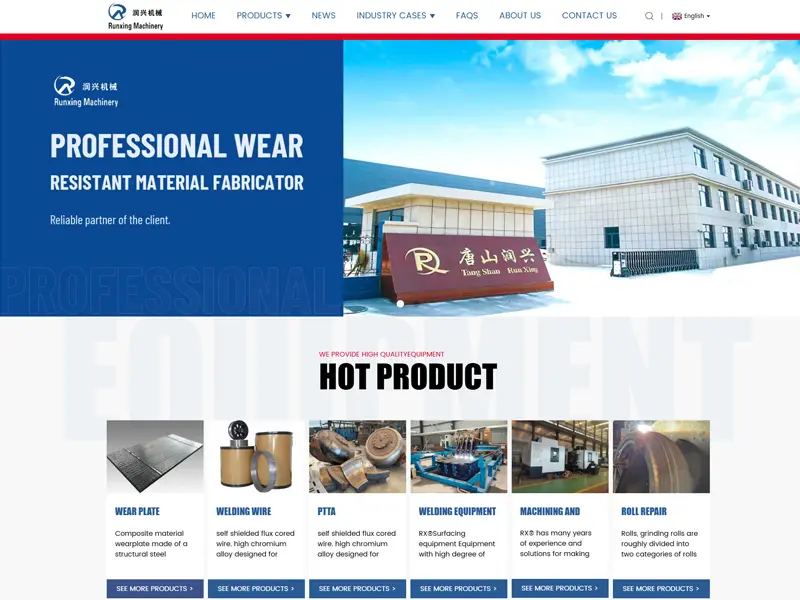
Our official digital platform offers global buyers direct access to detailed product datasheets, CCO wear plate chemical profiles, and a portal to request custom-engineered solutions directly from our engineering team.
Read More >
At the 2024 South Africa International Construction and Mining Machinery Exhibition, we showcased our specialized bimetallic wear liners and automatic surfacing technologies to international operators from across the African continent.
Read More >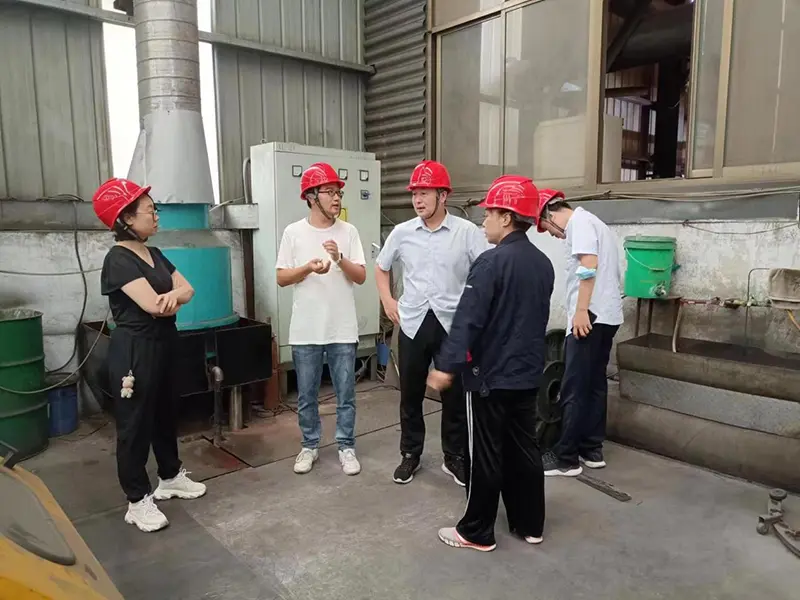
Under the guidance of the metal materials and forming technology team, we work closely with academic experts to continuously refine our alloy formulations and optimize carbide deposition during the hardfacing process.
Read More >
Our collaboration with VAUTID helps ensure our hardfacing processes conform to international standards, providing our clients with reliable, high-performance wear protection solutions.
Read More >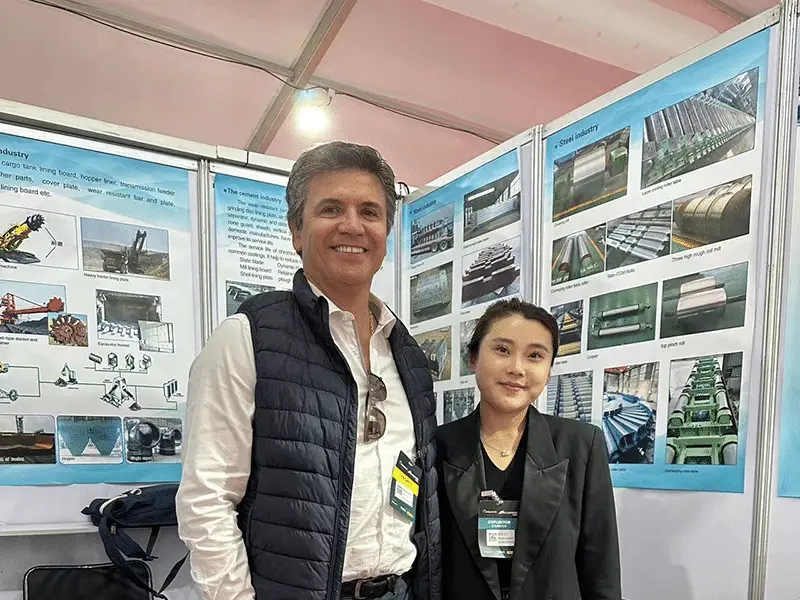
We showcased our specialized heavy mining chute liners, wear plates, and hardfacing consumables at Latin America's largest professional mining exhibition, strengthening our networks in South America.
Read More >Expert metallurgical insights into CCO wear plates and custom hardfacing technologies.
Standard steel plates (like AR500) achieve hardness via thermal quenching, which hardens the entire steel structure but offers limited resistance to high sliding wear. The bimetallic CCO manufacturing process fuses a specialized high-carbon, high-chromium weld alloy to a tough backing plate. This produces extremely hard chromium carbides (M7C3) within the overlay, creating a wear life that can exceed quenched steels by up to ten times under severe abrasion.
These relief cracks are a normal and essential feature of the CCO manufacturing process. As the molten cladding alloy cools, contraction stresses build up in the hard overlay. The formation of these transverse hairline cracks relieves this residual stress, preventing deformation and allowing the plate to be rolled, bent, and fabricated without delaminating.
Yes. The mild steel substrate backing provides a strong, weldable base. You can install CCO plates using plug welding, perimeter welding, or stud fasteners directly onto your equipment's structural components, while the hardfaced overlay remains exposed to the wear stream.
Open-arc welding uses self-shielded flux-cored wire, providing excellent visibility and flexible deposition, making it ideal for complex configurations. Submerged-arc welding uses an external blanket of granular flux, which protects the weld pool and produces a smooth, high-deposition overlay ideal for large, flat plates.
We manage our production processes in strict compliance with ISO9001 and DIN standards, utilizing high-quality materials from our partnerships with brands like VAUTID. For international trade, our partner Hebei Yuwan International Trade Co., Ltd. handles all shipping documents, customs clearance, and global logistics, ensuring reliable and timely delivery.
Our partnerships and quality materials ensure dependable wear protection.

Explore our full range of wear plates, custom fabricated liners, and specialized welding consumables.
Engineered with heavy-duty bimetallic cladding to survive extreme wear and sliding abrasion.
Request details
Custom tailored dimensions and chemistry optimized for specific heavy-duty equipment configurations.
Request details
Formulated for open arc welding, delivering precise alloy deposit structures without external shielding gas.
Request details
Customized lining panels for mining cement chutes, boasting supreme chromium carbide distribution.
Request details
Optimized wires for vertical mill rollers and rebuild work, guaranteeing structural repair integrity.
Request details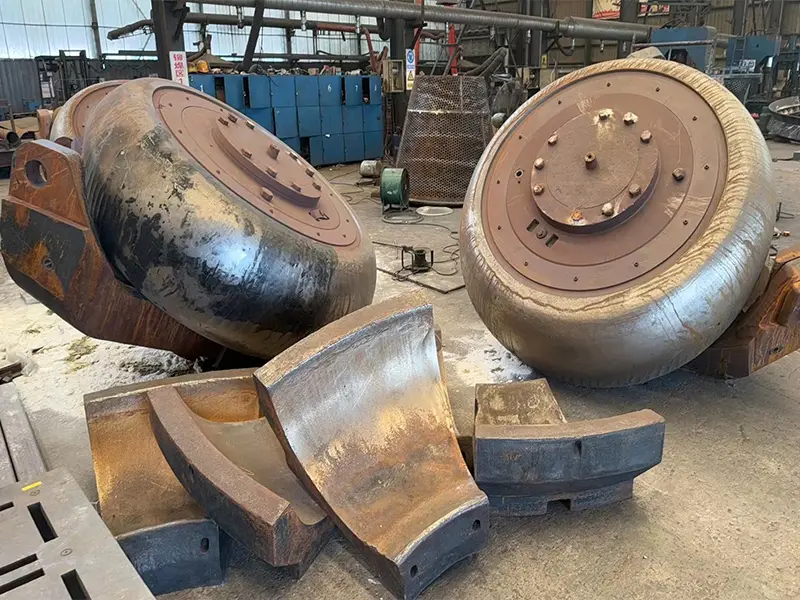
A specialized flux-cored wire configuration designed to perform under high sliding abrasion loads.
Request details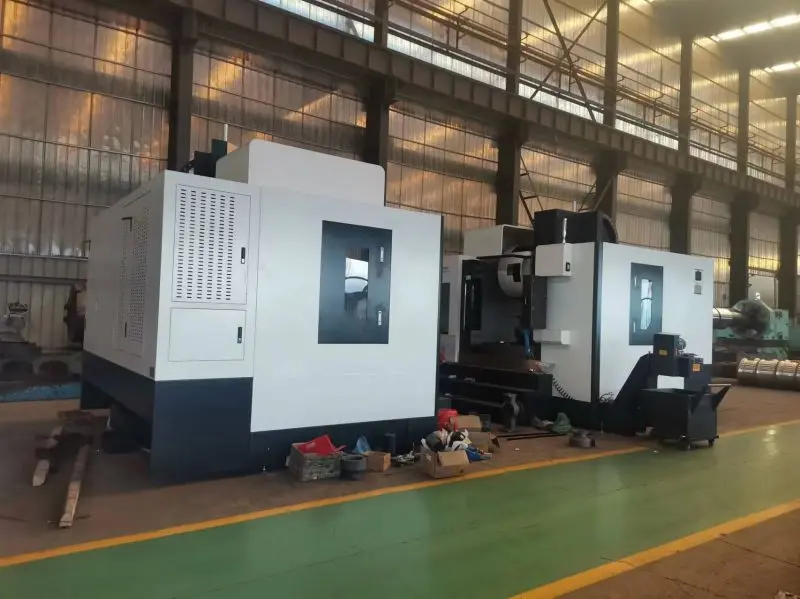
Full fabrication capabilities, including rolling, cutting, bending, and assembly of complex steel components.
Request details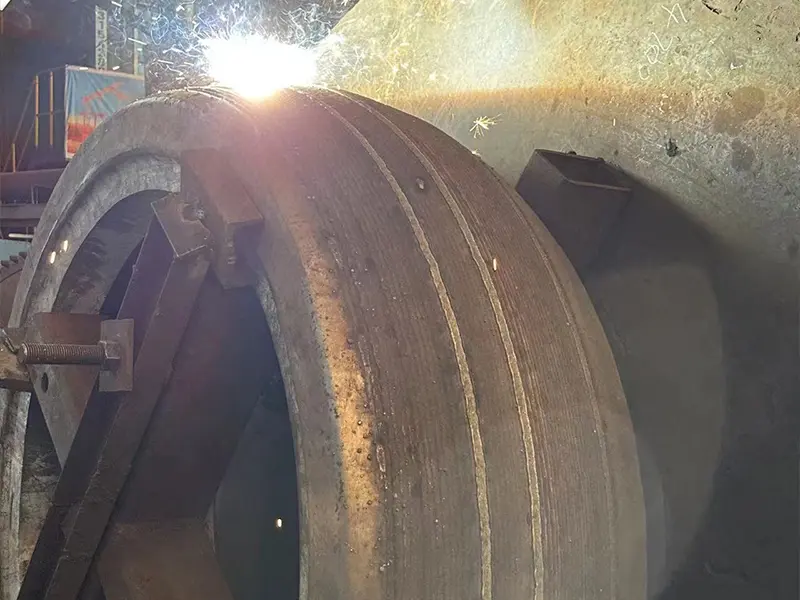
Reclaiming worn vertical cement rolls and table segments using automated welding systems to restore original profiles.
Request details Runxing machinery