Choosing a Good Flux Core Welder can greatly impact your welding projects. These welders are essential for both beginners and professionals. They provide versatility and efficiency in various settings. With the right flux core welder, you can tackle tasks like auto repairs, metal fabrication, and DIY projects.
In this article, we explore the top 10 good flux core welders available today. Each welder is evaluated based on its performance, usability, and features. These tools should not only be efficient but also reliable. A user-friendly design is essential for those new to welding. However, not every good flux core welder suits every project's needs.
Moreover, the cost can vary significantly. Investing in a more expensive model might not guarantee better results. When making your choice, consider factors like your skill level and specific requirements. A good balance of quality and budget is crucial. Ultimately, the best flux core welder is one that aligns with your unique welding demands.
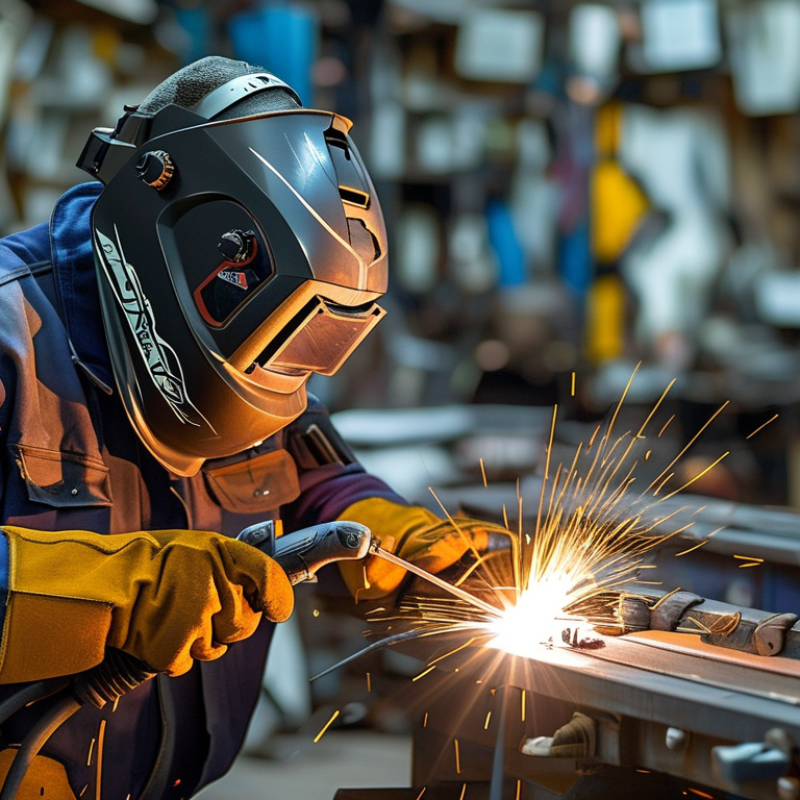
When it comes to flux core welding, efficiency is key. A recent industry report highlighted that professionals often prioritize machine output and ease of use. The top flux core welders stand out for their ability to deliver strong welds in challenging environments. These machines function well under windy conditions and in outdoor settings, making them versatile for various tasks.
Moreover, the American Welding Society states that flux core welding has increased in popularity, especially in construction and repair. Its efficiency can be attributed to its ability to weld thicker materials compared to MIG welding. Essential statistics indicate a growing market, with a projected annual growth rate of over 5% in the welding equipment sector.
However, not every flux core welder meets the desired standards of efficiency. Some models can struggle with common issues like inconsistent feed speed or poor gas shielding. This often leads to weld defects, requiring additional repair work. Users must look closely at machine specifications and user reviews to find a model that genuinely excels in performance. A deeper understanding of these machines can assist welders in making informed choices that enhance their productivity.
When selecting a flux core welder, several key features must be prioritized. One crucial aspect is the welder's voltage. Higher voltage levels provide better penetration and can manage thicker materials efficiently. Industry reports indicate that welders with 220 volts often yield superior results compared to those operating at lower voltages. This is vital for achieving strong, durable welds in varied applications.
Another important feature is the wire feed speed. A consistent wire feed ensures smooth operation and minimizes the risk of defects. Data from welding research suggests that an optimal feed speed leads to cleaner welds and enhanced productivity. Additionally, the duty cycle should not be overlooked. A welder's duty cycle indicates how long it can operate before needing a cooldown period. A higher duty cycle translates to longer working time, which is advantageous for larger projects.
Safety features are equally essential. Essential elements like thermal overload protection can prevent accidents. Proper ventilation for gas emissions also enhances user safety. Evaluating these features means considering both performance and safety. Users should weigh their specific needs and reflect on each feature's influence on their overall welding efficiency.
When choosing flux core welders, industry-standard performance ratings are crucial. Look for welders with duty cycles above 60%. This ensures that the machine can operate effectively for extended periods. A higher duty cycle correlates with better performance and can significantly save time on long projects.
Pay attention to voltage output specifications. Most professionals agree that a voltage range of 18-30 volts gives more control over welding quality. Measuring the amperage is also vital. A welder with an adjustable amperage allows for versatility in various welding tasks. This flexibility contributes to achieving strong welds while minimizing defects.
Tip: Always check user reviews for feedback on real-world performance. Insights from certified welders can guide you in your decision. If an entry-level welder consistently has issues, it may indicate a lack of reliability.
Another consideration is the weight of the machine. Heavier welders often offer better stability but can be cumbersome. Think about the balance between portability and functionality for your specific needs. Remember, the right welder should feel comfortable in your hands and not lead to fatigue during prolonged use.
When it comes to welding, choosing the right technique can significantly impact the final result.
Flux core welding offers several advantages,
particularly in terms of portability and the ability to work outdoors.
The self-shielding wire used in flux core welding minimizes the risk of contamination from the atmosphere.
This makes it ideal for applications where conditions may not be optimal.
However, the welds can sometimes be less aesthetically pleasing compared to MIG welding.
MIG welding, on the other hand, provides a cleaner finish. It utilizes a shielding gas,
which helps produce smooth and consistent welds. This method is often preferred for projects where appearance matters.
The downside? MIG welding can be less effective outdoors, especially in windy conditions.
Many welders find that flux core welding is more forgiving for beginners. However, learning curve issues may arise, leading to inconsistent welds. It's essential to practice and refine skills in both methods. Understanding the strengths and weaknesses of each welding technique can lead to better results in various projects.
Flux core welding has gained popularity in various industries due to its cost-effectiveness. A recent industry report highlighted that these machines can save users up to 30% on labor costs compared to traditional welding methods. The design of flux core welders allows for efficient work in outdoor conditions, making them suitable for construction and repair tasks. Many skilled welders report that they appreciate the reduced shielding gas requirements, further lowering costs and simplifying the welding process.
When selecting a flux core welder, consider the types of projects you’ll tackle. For heavy-duty tasks, machines offering higher amperage can deliver stronger welds. Meanwhile, lighter models may suffice for automotive or light fabrication work. Using the right filler material also influences cost-effectiveness. It could significantly affect both the quality of the weld and the overall expenses related to materials.
Tips: Always ensure proper ventilation when welding. This enhances safety and helps maintain the integrity of the weld. Additionally, practice with scrap materials before starting on the actual project to reduce waste. Inevitably, mistakes will happen, but learning from them improves skills over time.
: Flux core welding is portable and effective outdoors. It minimizes contamination risks due to self-shielding wire.
Flux core welds may be less visually appealing than MIG welds, which offer a cleaner finish due to shielding gas.
Yes, it can save users up to 30% on labor costs. Less shielding gas is also needed, which reduces overall expenses.
Consider project types. Heavy-duty tasks need higher amperage, while lighter models work for automotive or light projects.
Yes, beginners may face a learning curve leading to inconsistent welds. Practice is essential for improving skills.
Some models have inconsistent feed speeds and poor gas shielding. This can cause weld defects requiring repairs.
Always ensure proper ventilation when welding. This helps maintain weld quality and protects your health during the process.
Practicing with scrap helps reduce waste and improves skills. Mistakes will happen, and learning from them is crucial.
Yes, flux core welding performs better in windy conditions compared to MIG welding, making it more versatile outdoors.
The weld may require more cleanup due to less aesthetic appeal when compared to MIG welding. It's essential to practice for better results.
When it comes to selecting a Good Flux Core Welder, understanding the key features and performance standards is essential for efficient welding needs. The article delves into the top 10 flux core welders, highlighting their efficiency, weld quality, and cost-effectiveness across various applications. Readers will learn about crucial industry-standard performance ratings that help distinguish high-performing welders from others, as well as a comparison between flux core and MIG welding processes.
In addition, the overview emphasizes the importance of considering specific functionalities and design elements when choosing a welder. By analyzing different models, it provides valuable insights into how a Good Flux Core Welder can meet different welding requirements, ultimately aiding users in making informed purchasing decisions that align with their operational demands.
Runxing machinery