In the world of welding, understanding the right materials is vital. Fcaw Wire, or flux-cored arc welding wire, plays a crucial role in producing high-quality welds. Renowned welding expert Dr. Emily Taylor emphasizes, "Choosing the right Fcaw Wire can make all the difference in your project’s success." Her insights highlight the necessity of informed choices when selecting welding materials.
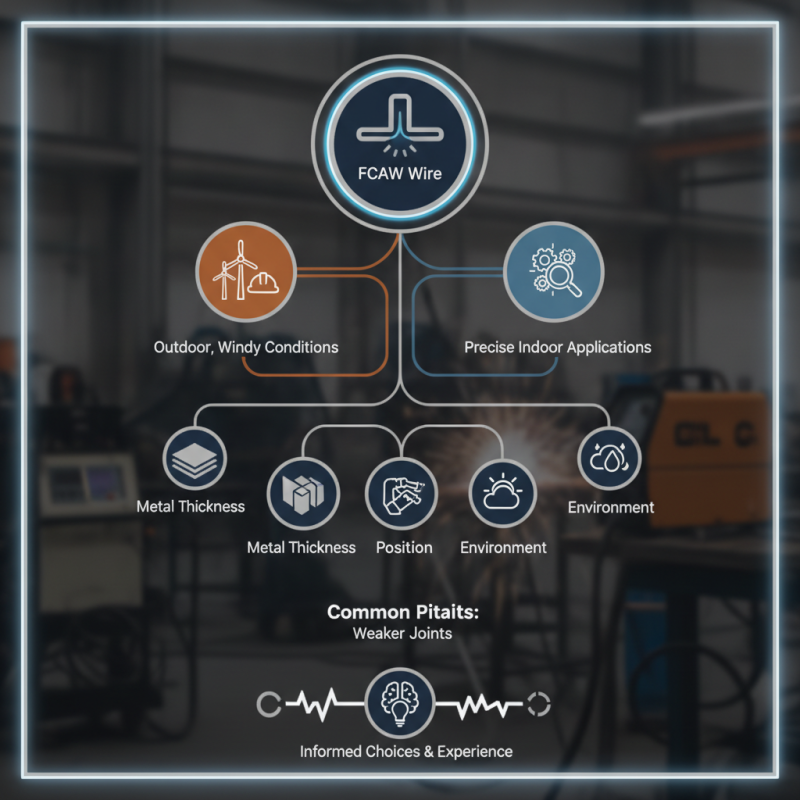
Different types of Fcaw Wire provide varying benefits. Factors like metal thickness, welding position, and the environment can influence the effectiveness of different wires. For instance, some wires are better suited for outdoor, windy conditions, while others excel in precise indoor applications. This complexity can be overwhelming for many welders.
Despite advancements in welding technology, it’s essential to acknowledge common pitfalls. Some welders may overlook specific wire specifications. This oversight can lead to weaker joints and poor visual results. Understanding the nuances of Fcaw Wire is paramount. Reflecting on personal experiences can enhance decision-making processes in selecting the optimal wire for specific tasks.
What is FCAW Wire: An Overview of Flux-Cored Arc Welding Wire
FCAW wire, or flux-cored arc welding wire, is a popular choice in welding applications. This type of wire contains a flux core that generates shielding gas when heated. This protects the weld pool from contamination and improves the weld quality. FCAW is known for its versatility. It can be used on various materials, including steel and stainless steel.
Choosing the right FCAW wire requires understanding its specifications. Flux composition and wire diameter are key factors. Different jobs demand specific wires. For instance, thicker wires may provide deeper penetration. In contrast, thinner wires are suitable for lighter materials. Consider the welding position too. Certain wires perform better in vertical or overhead applications.
Some challenges exist with FCAW wire. Proper settings are crucial. Incorrect voltage or feed speed can lead to defects. It's important to practice and adjust accordingly. Not all wires are equal; testing different options on scrap material can help. Experimentation allows welders to find the best fit for their specific needs.
The Key Benefits of Using FCAW Wire in Welding Applications
FCAW (Flux-Cored Arc Welding) wire offers multiple benefits that significantly enhance welding efficiency and effectiveness. A leading industry report indicates that FCAW can increase productivity by up to 25% compared to traditional methods. This wire type allows for faster welding speeds, which is crucial in high-volume projects. FCAW can be used in different positions and environments, making it versatile for various applications.
One key advantage of FCAW wire is its ability to produce less spatter and cleaner welds. According to a study by the American Welding Society, using FCAW results in a smoother bead and reduced post-weld cleaning efforts. This attribute not only saves time but also reduces overall costs. Moreover, FCAW is suitable for outdoor use. It performs well in windy conditions, ensuring a stable operation without significant weld contamination.
However, FCAW isn’t without drawbacks. It may require specialized equipment and training, which can be a barrier for some users. Additionally, not all FCAW wires are suitable for every application. Careful consideration must be given to wire type, core composition, and shielding gases. Industry professionals suggest conducting thorough research and possibly testing different wires to find the best fit. Understanding the materials and techniques can enhance results while minimizing frustrating experiences.
Types of FCAW Wire: Understanding Self-Shielded vs. Gas-Shielded
FCAW, or flux-cored arc welding, utilizes specific wires to enhance welding capabilities. Among the two primary types of FCAW wire are self-shielded and gas-shielded options. Self-shielded FCAW wire, often used outdoors or in windy conditions, contains a flux that generates its own protective gas. This feature allows for more versatile application in challenging environments. Industry data shows that around 70% of welders in construction prefer self-shielded wires for their ease of use in varying conditions.
On the other hand, gas-shielded FCAW wire requires an external shielding gas, providing improved arc stability and weld quality. This type is preferred in more controlled environments, such as manufacturing or fabrication settings. Reports indicate that gas-shielded FCAW produces less spatter and better penetration, making it suitable for thicker materials. It’s important to note that while gas-shielded options have their advantages, they can be less effective outdoors where wind disrupts the shielding gas.
Choosing the right FCAW wire depends on the application and working conditions. Understanding the performance characteristics of both types can help welders make informed decisions. Many professionals still grapple with selecting the best wire for their specific needs, indicating a gap in industry knowledge. Continuous education and hands-on experience are essential to hone these skills effectively.
Factors to Consider When Choosing FCAW Wire for Your Project
When selecting FCAW (Flux-Cored Arc Welding) wire, several critical factors should guide your decision. The chemistry of the wire is essential. For example, wires with higher alloy content can improve the mechanical properties of the weld. A 2021 report from the American Welding Society indicates that welds made with high-alloy wires show an increase in tensile strength by up to 30%.
Another important aspect is the diameter of the wire. Larger diameters usually handle thicker materials effectively. However, a wire that is too large can lead to excessive spatter. According to industry data, using a 1/16-inch wire may increase deposition rates by 25% compared to 0.035-inch wires. This is significant for time-sensitive projects.
Consider the type of shielding gas as well. While FCAW does not always require gas, using it can enhance weld quality. Specific gas combinations can reduce oxidation and improve bead appearance. A survey by Welders Union found that 75% of professionals prefer using a mixed gas for better results. This preference highlights the need for thoughtful equipment choices in achieving optimal welds.
Tips for Properly Using FCAW Wire to Achieve Optimal Welding Results
FCAW wire, or Flux-Cored Arc Welding wire, is essential for efficient welding. It’s crucial to understand how to use it properly to achieve the best results. Start by selecting the correct type of FCAW wire. Consider the material of the base metal and the welding environment. This helps ensure good arc stability and penetration.
Tips for using FCAW wire effectively include maintaining a consistent travel speed. If you move too fast, the weld may lack strength. Conversely, moving too slowly can lead to excessive heat input. Adjust your angle for optimal control. A 10 to 15-degree incline can improve bead shape.
Monitor the gas flow. Incorrect settings can lead to porosity and contamination. Ensure your setup is clean and free of rust or debris. Remember, practice is key. Mistakes may happen, but they are excellent learning opportunities. Keep experimenting to refine your technique.
FAQS
Higher alloy content can improve mechanical properties. Some wires may increase tensile strength by up to 30%.
Larger diameters can handle thicker materials but may cause excessive spatter. Choose wisely for your project.
While not always necessary, using shielding gas can enhance weld quality and reduce oxidation.
Consistent speed is crucial. Moving too fast can weaken the weld; too slow may generate excessive heat input.
A 10 to 15-degree incline can enhance bead shape. Adjust for better control and results.
Check gas flow settings and ensure your setup is clean. Rust and debris can cause porosity in your welds.
Yes, practice helps refine your technique. Mistakes are learning opportunities; keep experimenting.
Choose the correct FCAW wire based on the base metal and welding environment. It’s essential for penetration.
Reflect on your technique and setup. Analyze travel speed, angle, and cleanliness to identify areas for improvement.
Conclusion
FCAW wire, or Flux-Cored Arc Welding wire, is a vital material in the welding industry, known for its ability to deliver high-quality welds in various applications. This type of wire comes in two main forms: self-shielded and gas-shielded, each offering distinct advantages depending on the welding conditions and project requirements. The use of FCAW wire provides several benefits, such as improved productivity, versatility in different environments, and the ability to weld thick materials efficiently.
When choosing the best FCAW wire for your project, it's essential to consider factors like the type of shield required, the materials being welded, and the desired weld quality. Additionally, proper usage techniques are crucial for achieving optimal results, ensuring that welders can leverage the full potential of FCAW wire for successful and durable welds. By understanding these aspects, welders can make informed decisions and enhance their welding processes.

 Runxing machinery