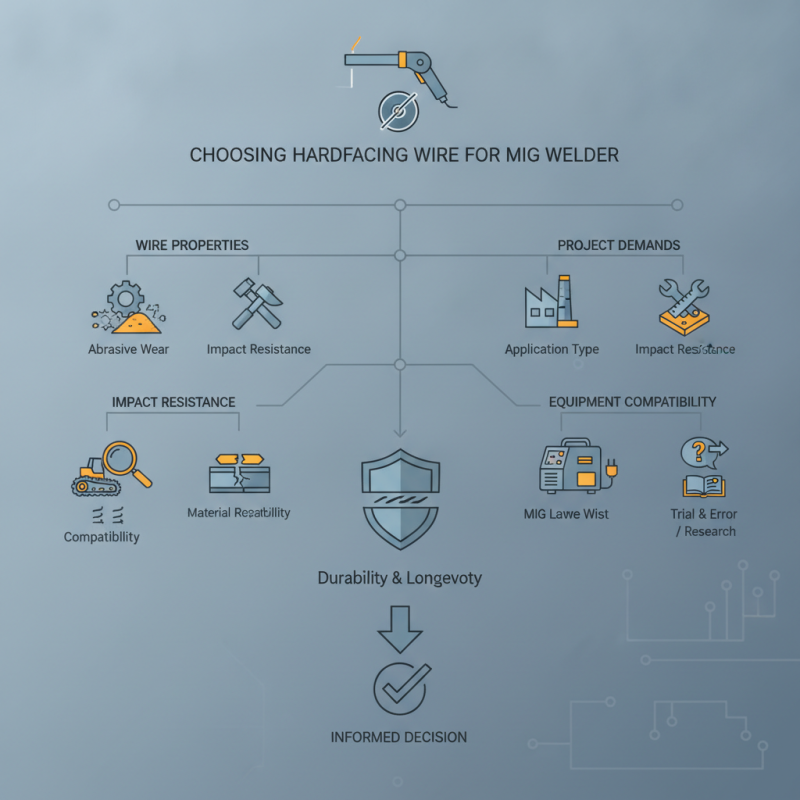
Choosing the right hardfacing wire for a MIG welder can significantly impact your welding projects. The selection process is not straightforward and requires careful consideration. Hardfacing wire for MIG welder comes in various types designed for different applications. Knowing the specifics can help ensure durability and longevity of the materials being welded.
Understanding the properties of hardfacing wire is crucial. For instance, some wires are better suited for abrasive wear, while others may excel in impact resistance. Identifying your project's demands will guide your choice. Experienced welders know that sometimes, trial and error can lead to valuable insights, even if it feels frustrating at times.
Moreover, the wire's compatibility with your welding equipment is essential. Not all wires work well with every MIG welder model. Mismatches can lead to inefficient welding and unsatisfactory results. Being aware of these challenges is key to making an informed decision. So, invest time in research and consult reliable sources to find the best hardfacing wire for MIG welder tailored to your specific needs.
Hardfacing wire is crucial in various applications, particularly where wear resistance is needed. It provides a protective layer on surfaces exposed to friction, impact, or erosion. Understanding its basics is vital for anyone engaged in welding.
When selecting hardfacing wire, consider material compatibility. Different metals bond differently, affecting effectiveness. For instance, some wires are designed for carbon steels, while others work better with alloys. Thickness and deposition rate also play significant roles. A thicker wire can deliver more robust protection but may require more heat, complicating the welding process.
Applications vary widely. Mining equipment, for instance, benefits from hardfacing to withstand abrasive conditions. In contrast, construction machinery often uses it to enhance durability against impact. Each application has unique challenges, highlighting the need for a tailored approach. Reflecting on these factors can lead to better choices, ultimately improving equipment life and performance.
| Tip | Description |
|---|---|
| 1. Understand the Application | Consider the specific wear conditions and the material being welded. |
| 2. Choose the Right Alloy | Select an alloy that matches the wear resistance needed for your job. |
| 3. Examine the Hardness | Check the hardness rating of the hardfacing wire for performance expectations. |
| 4. Select the Right Diameter | Choose a diameter suitable for your welding machine and application requirements. |
| 5. Consider the Deposition Rate | Higher deposition rates can improve efficiency for large jobs. |
| 6. Evaluate Compatibility | Ensure the wire is compatible with your base materials and other fillers. |
| 7. Check the Manufacturer's Specifications | Refer to technical data sheets for information on performance and characteristics. |
| 8. Review Customer Feedback | Look for reviews and testimonials from other welders who used the wire. |
| 9. Price vs. Quality | Balance budget constraints with the quality needed for the project. |
| 10. Test a Sample | If possible, test a small sample before committing to larger quantities. |
: Compatibility ensures the wire matches welder settings. This prevents poor weld quality and reduces durability.
Improper pairing can decrease effectiveness by up to 30%. Understanding material properties enhances bond strength.
Thinner wires allow easier control, while thicker wires provide higher deposition rates. Each has pros and cons based on the application.
Using substandard wire can cut machinery service life by up to 50%. Quality is crucial for durability.
Choose wire that matches the base material. Different alloys enhance bonding and performance for various materials.
Incorrect voltage and travel speed can lead to weak joints. Always consult guidelines to adjust settings properly.
Ignoring these factors results in poor performance. This can lead to excessive wear and additional costs.
Testing provides insights into performance before full-scale use. It helps ensure effective results in actual applications.
Yes, overly thick wires may create poor arc stability. This can lead to significant challenges in achieving quality welds.
Selecting the right Hardfacing Wire for MIG Welder is crucial for achieving optimal performance in welding applications. Understanding the basics and applications of hardfacing wire lays the foundation for making an informed choice. There are various types of hardfacing wires available, each suited for different applications, and it’s essential to consider key factors such as material compatibility, desired hardness, and the specific welding environment.
When choosing Hardfacing Wire for MIG Welder, matching the wire to the welder’s specifications is vital for consistency and quality. Ensuring performance involves assessing the wire’s composition and characteristics, which can significantly impact the durability of the weld. Following these essential tips can lead to better outcomes in hardfacing processes, enhancing the longevity and resilience of the welded components.

 Runxing machinery