Global welding projects demand more than a stable arc. They require adaptable equipment, qualified operators, and evidence-based process control. Flux Mig can support this balance when project teams understand its technical limits and applications.
In practice, many suppliers use “Flux Mig” to describe flux-cored arc welding with shielding gas. Technically, this differs from conventional GMAW, although both processes use continuous wire. The distinction matters. It affects wire selection, polarity, fume extraction, procedure qualification, and inspection requirements. AWS D1.1 and ISO 15614-1 provide useful frameworks for qualifying welding procedures and verifying performance.
The workforce challenge is real. The U.S. Bureau of Labor Statistics projects about 42,600 annual openings for welders, cutters, solderers, and brazers through 2033. That figure reflects replacement demand and ongoing industrial activity. Meanwhile, the International Federation of Robotics reported 541,302 industrial robots installed worldwide in 2023. Automation is expanding, but skilled welding judgment remains essential. Robots still need accurate joint fit-up, correct wire parameters, and reliable inspection data.
Flux Mig offers practical advantages on bridges, heavy machinery, pipelines, and structural assemblies. Its higher deposition potential can reduce welding time on thicker materials. A clean workshop floor, consistent wire feed, and controlled shielding gas are not minor details. They directly influence porosity and rework.
Still, no process is universally superior. Wind, access restrictions, operator training, and local codes can change the decision. This is where project experience becomes valuable. A careful trial weld may reveal weaknesses that a sales brochure misses. Proper documentation, independent inspection, and qualified personnel make global deployment more reliable.
Definition and Working Principle of Flux MIG Welding
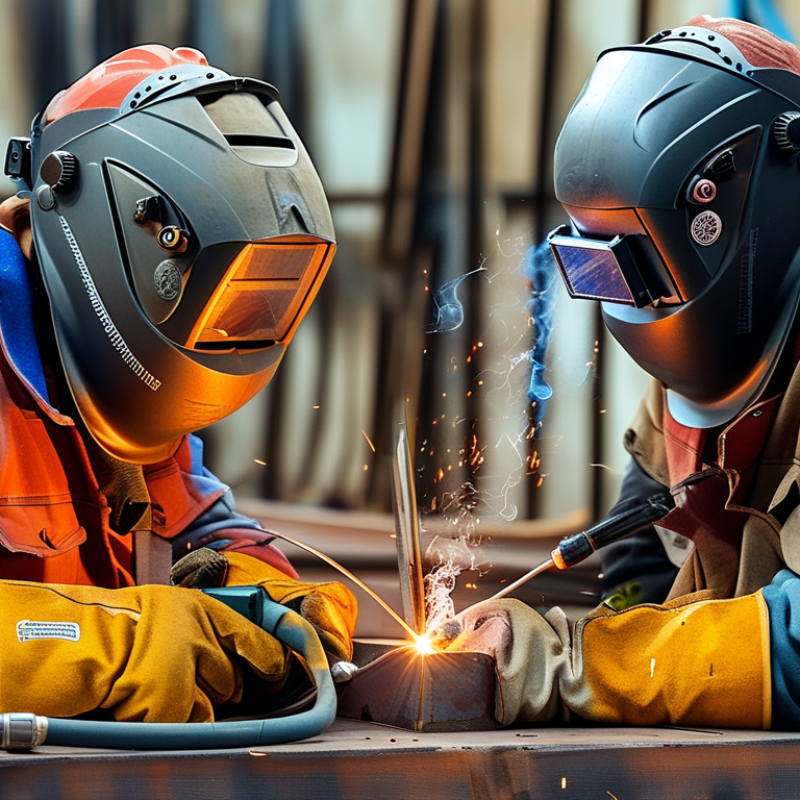
In trade conversations, “Flux MIG” usually refers to gas-shielded flux-cored arc welding, not conventional MIG welding. Its tubular wire contains flux compounds around a metal core. An electric arc forms between the wire and the workpiece. Heat melts both materials, while the flux produces shielding gases and a protective slag layer. External shielding gas may also protect the molten pool. The result is a stable weld with strong penetration and useful deposition rates, especially on structural steel and thicker sections.
The process suits global projects because crews can weld outdoors with fewer interruptions from light wind. It also tolerates some surface contamination better than solid-wire MIG, although cleaning remains essential. The American Welding Society’s 2023 workforce outlook projects a U.S. shortage of about 330,000 welding professionals by 2028. That pressure makes productive, repeatable processes valuable, but productivity alone is not enough. Operators must control wire storage, gas flow, polarity, travel angle, and interpass temperature. Slag removal is necessary between passes. Small mistakes remain visible.
A qualified welding procedure should define consumables, joint design, preheating, inspection, and acceptance criteria. ISO 15614-1 and AWS D1.1 provide widely used qualification frameworks, depending on project jurisdiction. Field experience shows that wind screens, dry electrodes, and calibrated feeders prevent many avoidable defects. Still, Flux MIG is not universally superior. Thin sheet can suffer from excessive heat, and poor parameter selection may create porosity or slag inclusions. That limitation deserves honest attention.
Essential Equipment and Consumable Selection
Why Choose Flux MIG for Global Welding Projects?
Essential Equipment and Consumable Selection
Flux MIG welding suits demanding projects because it handles outdoor conditions and variable surface cleanliness. The process also supports productive welding on structural steel, pipelines, and heavy machinery. However, equipment selection determines whether these advantages become reliable results.
Choose a power source with a suitable duty cycle, stable arc control, and compatible polarity settings. A rugged wire feeder helps maintain consistent feeding during long shifts. Select the correct drive rolls, liner, contact tips, and torch rating for the wire diameter. For field work, protect connections from dust, moisture, and accidental impact. Small parts can cause large failures.
Consumable selection requires careful attention to wire classification, tensile strength, impact performance, and welding position. Gas-shielded flux-cored wire usually needs external shielding gas, while self-shielded wire does not. Polarity must follow the qualified welding procedure and consumable instructions. Store wire in dry, controlled conditions. Damp flux can create porosity and unstable arcs. Local codes may also require different testing or documentation, so project engineers should verify requirements before purchasing.
My early equipment choices were too optimistic about duty cycle. Production slowed when heat protection activated repeatedly. That experience changed my planning. I now test wire feeding, gas flow, and arc behavior before mobilization. A short trial weld reveals more than a catalog description. Operators should record voltage, amperage, travel speed, and visible defects. The process is powerful, but not forgiving.
Why Choose Flux MIG for Global Welding Projects?
Typical FCAW operating windows by wire diameter. Larger wires support higher current levels and are generally suited to thicker sections and higher deposition requirements. Always verify the final settings against the qualified WPS and applicable standard.
Selection insight: Smaller-diameter flux-cored wires provide better control on thinner material, while larger diameters can deliver higher productivity on heavy fabrication. Wire classification, shielding method, joint position, plate thickness, and local power supply requirements should also guide consumable selection.
Advantages for Global Welding Projects
Why Choose Flux MIG for Global Welding Projects?
Flux MIG welding offers practical advantages when projects span different climates, workshops, and skill levels. A continuously fed flux-cored wire supports steady production and reduces frequent rod changes. That matters on long seams, heavy frames, and repair schedules with limited downtime. Field experience shows strong performance on structural steel, especially where wind makes external shielding gas unreliable. Outdoor work becomes less fragile.
The process also supports flexible logistics. Teams can transport wire and equipment between sites without building a large gas supply chain. Flux produces a protective slag layer, which can help tolerate minor surface contamination. However, it is not a universal answer. Slag removal takes time, and incorrect settings may create porosity or excessive spatter. Our trial welds sometimes look acceptable before inspection reveals weak fusion. Parameter checks remain essential.
Tips: Match wire type and polarity to the base metal. Clean mill scale from critical joints. Keep wire storage dry and sealed. Test a sample weld after every major material change. Record voltage, wire feed speed, and travel speed for repeatable results. Train operators to inspect bead shape, penetration, and slag coverage. Small records help global teams work consistently, though they cannot replace qualified supervision and formal inspection.
Quality, Safety, and Environmental Considerations
Why Choose Flux MIG for Global Welding Projects?
Flux MIG, often using flux-cored wire with shielding gas, suits demanding field conditions. It can provide strong penetration and productive deposition rates. Global projects still require consistent results across different crews, climates, and material batches. Quality begins with the correct wire classification, joint preparation, and approved welding procedure. Test coupons can reveal porosity, undercut, or poor fusion before production begins. A clean, attractive bead is useful, but it is not proof of structural integrity. Inspection records and qualified welders provide stronger evidence.
Safety must remain practical, not merely written in a procedure. Welding fumes require effective ventilation, suitable respiratory protection, and regular exposure checks. Operators also need flame-resistant clothing, eye protection, and stable equipment connections. Slag removal can create sharp fragments and airborne dust. Small oversights matter. Environmental control includes collecting slag, reducing wire waste, and managing used containers responsibly. Efficient travel speed and proper current settings can lower energy use, although savings are often overestimated when rework is ignored. That is worth reconsidering.
Tips: Confirm local code requirements before welding. Store wire in dry conditions. Mark every repaired weld clearly. Photograph difficult joints for later review. Stop when visibility, ventilation, or grounding becomes uncertain. A rushed repair may pass visually and still fail testing. Reliable projects depend on honest records, repeatable training, and the willingness to question an accepted shortcut.
Steps for Implementing Flux MIG Across International Sites
Why Choose Flux MIG for Global Welding Projects?
Implementing Flux MIG across international sites starts with a practical site audit. Record base metals, joint designs, plate thicknesses, and available power supplies. Check ventilation and welding positions before selecting wire and shielding gas. Local engineers should review applicable codes and customer requirements. Then prepare a controlled welding procedure specification for each major application. Do not assume one setting fits every workshop. Differences in humidity, cable length, and operator technique can affect arc stability.
Run a small pilot at each location. Use qualified welders, calibrated machines, and traceable consumables. Inspect bead profile, penetration, porosity, and slag removal. Document voltage, wire feed speed, travel speed, and gas flow. Training should include setup, torch angle, interpass cleaning, and defect recognition. Remote instruction helps, but hands-on evaluation remains more reliable. A first trial may reveal an overlooked issue. That is useful. Revise the procedure, rather than hiding the weakness.
Tips: Keep settings visible near each workstation. Store wire in dry, clearly labeled areas. Photograph sample welds for comparison. Schedule periodic audits with local supervisors. Review rejected welds without blame, because small recurring defects often indicate a larger process gap. Use approved inspection methods and maintain records that support consistent decisions across sites.
FAQS
: It usually means gas-shielded flux-cored arc welding. A tubular wire contains flux around a metal core. An electric arc melts the wire and workpiece. The flux creates shielding gas and protective slag. External gas may also protect the molten pool.
It performs well in light wind. The flux creates internal shielding and reduces interruptions. Wind screens still help. Strong wind can disturb shielding and cause defects. Outdoor welding is easier, not effortless.
It suits structural steel and thicker sections. It works well on frames, long seams, and field repairs. Continuous wire feeding supports steady production. Thin sheet needs caution. Excessive heat can distort or burn through it.
It tolerates minor surface contamination better than solid-wire welding. Cleaning remains essential for reliable fusion. Remove oil, loose rust, and mill scale from critical joints. Dirty steel can still cause porosity. That lesson is easy to ignore.
Operators must control wire type, polarity, voltage, and wire feed speed. Travel speed and torch angle also affect bead quality. Keep interpass temperature within the procedure limits. Record settings after successful test welds. Small changes matter.
Store the wire in a dry, sealed container. Protect it from moisture, dust, and temperature changes. Damp consumables can increase porosity and unstable arc behavior. Check the wire before use. Storage mistakes are surprisingly common.
Slag must be removed between welding passes. Remaining slag can become trapped inside the joint. Use suitable tools and inspect the surface before continuing. A clean pass exposes problems early. Skipping this step is poor practice.
Use a qualified welding procedure for each applicable joint. Define materials, preparation, preheating, inspection, and acceptance requirements. Calibrate feeders and check gas flow regularly. Test a sample after major material changes. Records improve consistency, but supervision still matters.
Poor settings may cause porosity, excessive spatter, weak fusion, or slag inclusions. Incorrect travel speed can change penetration and bead shape. A weld may look acceptable before inspection. Visual appearance is not proof of strength. We sometimes learn this late.
Conclusion
Flux Mig welding combines a continuously fed wire electrode with flux-based shielding to create a stable arc and protect the molten weld pool from atmospheric contamination. Its performance depends on selecting suitable welding machines, wire feeders, power sources, flux-cored wires, contact tips, and protective equipment according to material type, thickness, joint design, and site conditions. Proper parameter control, including voltage, current, travel speed, and wire feed rate, helps achieve consistent penetration and reliable weld quality.
For global welding projects, Flux Mig offers productivity, flexibility, and strong performance in outdoor or challenging environments where external shielding gas may be difficult to manage. Successful implementation requires standardized procedures, trained operators, inspection plans, and clear documentation that can be applied across international sites. Teams should also address ventilation, fire prevention, noise, waste handling, and responsible consumable storage. By combining appropriate equipment, quality control, safety practices, and environmental awareness, organizations can establish an efficient and repeatable Flux Mig process worldwide.

 Runxing machinery